Coveted Object
Omega Constellation Manhattan
Words: Jack Shepherdson
Photos: Georgia Griffiths
The Constellation name has graced many different Omega watches, and while all Omega Constellations are created equally, some are more equal than others.
Since the introduction of the line in 1952 to celebrate Omega’s watchmaking accuracy records and achievements, it’s continuously occupied the peak of the Omega watchmaking mountain - the name reserved for the watchmaker’s most accurate, well-crafted and ‘best’ watches. However, there’s a very clear distinction in the history of the Constellation, with 1982 being the year everything changed for the lineup, with the introduction of the Constellation Manhattan.
Pre-Manhattan, Constellations evolved from their roots of typically designed 50s watches with the occasional restrained flair, evolving to C-shape cases through the late 60s and early 70s, before jumping right off the deep end experimenting with a swathe of lunatic designs to house their equally mad Electroquartz movements - Omega’s earliest quartz watches. These were made at the time when Omega was deep in the trenches of the Quartz Crisis, the period in the 70s and 80s where affordable quartz movements democratised accurate timekeeping causing brands like Omega to do a bit of blue-sky thinking. If mechanical accuracy was no longer their silver bullet, how could they out-design, out-jewel and out-precious metal their new competition?
Omega threw a lot of designs at the Constellation wall in the late 70s, with not much of it sticking. They were floundering, and the line was in need of a big shakeup. Enter Carol Didisheim, a recent graduate of the Geneva School of Decorative Arts who, as her first project at Omega, was about to steer the Constellation ship in a whole new direction.
Tasked with designing a fresh new line of Constellations to house Omega’s ultra-thin quartz movement, her revolutionary watch design was a product of new watchmaking techniques. “Samples arrived from a glass factory that had developed a new technique of plating under glass”, Carol recalled in a 2010 interview about her design process. “In those years watches were very flat and often very graphic and we quickly recognised that this technology could help us find a way to hide the links and to eliminate the bezel which held the watch crystal in place and, therefore, to achieve a flatter, thinner profile”.
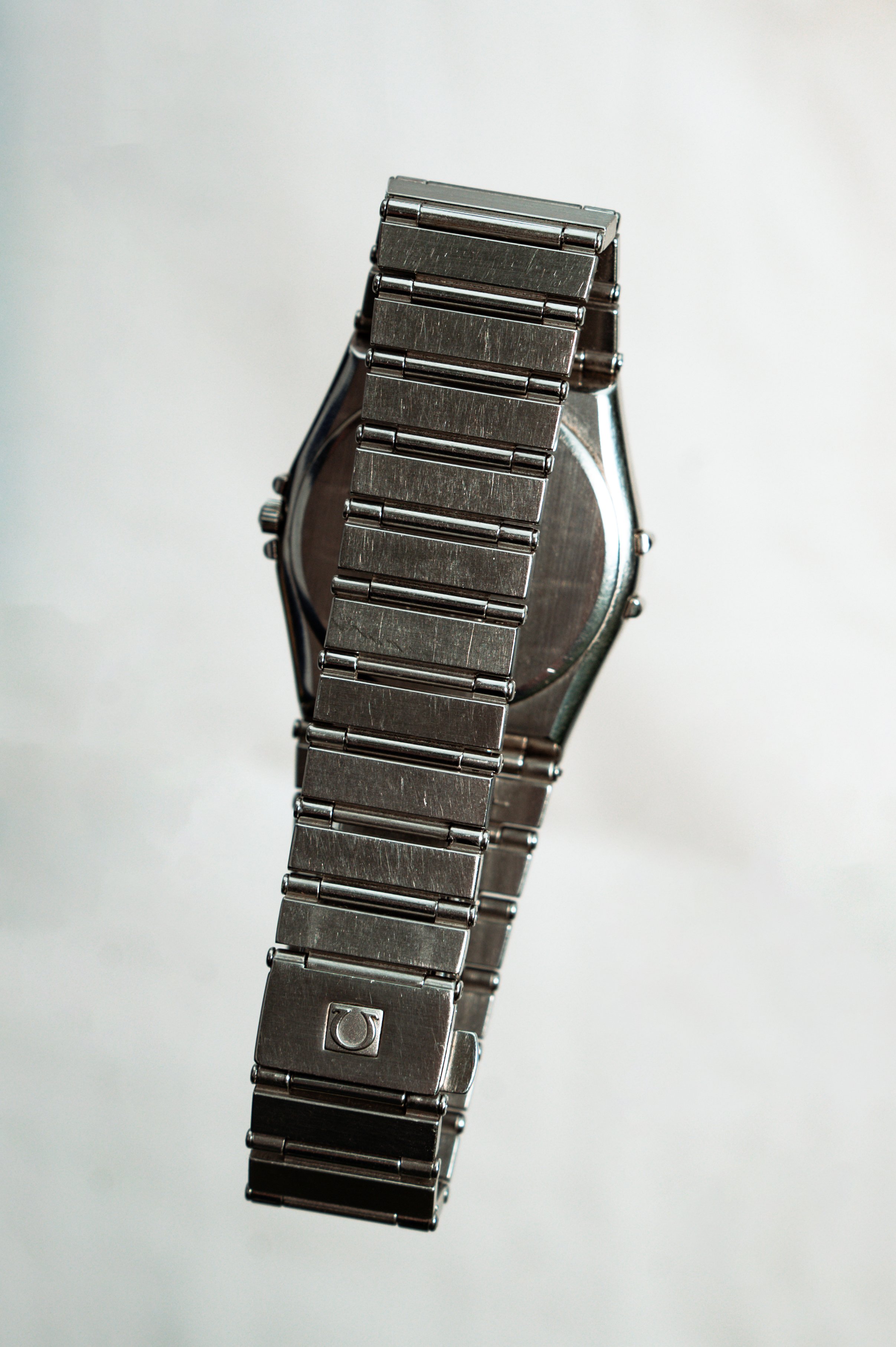
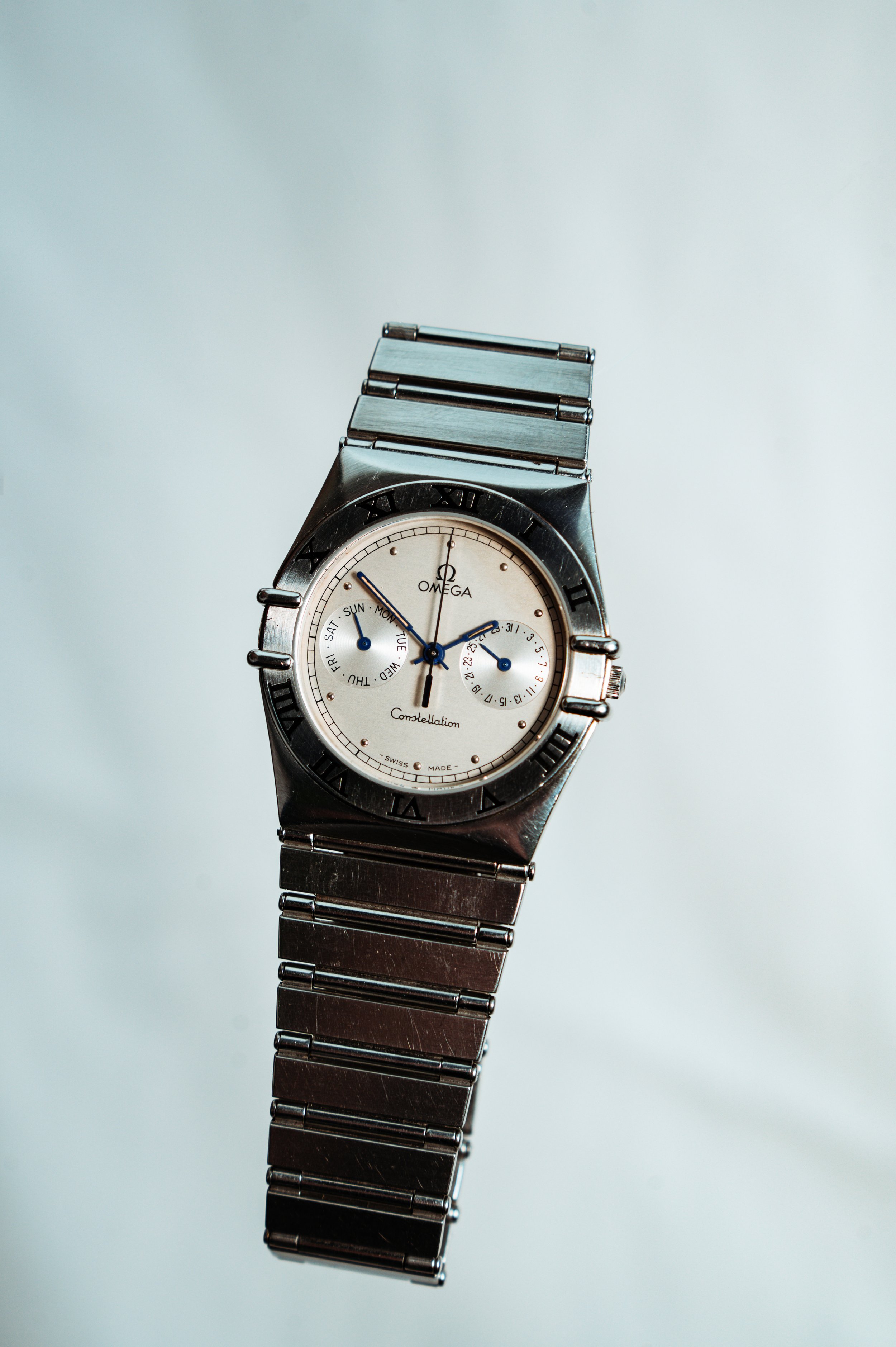
The characteristic claws, or ‘Griffes’, at the sides of the case later became decorative elements, though on the first Manhattans they were also essential in making this super-thin watch water resistant, usually a trait requiring chunky bezels and gaskets.
The inspiration for these claws was rather mundane, drawn from a circular bathroom mirror clamped to the wall with claws drilled into the wall. With the mirror serving as inspiration, Carol drew the shape and proportions of the claws to create a rhythm with the hinged bracelet’s polished connecting links.
Incredibly, the Constellation Manhattan Carol designed at just 26-years-old set a new design direction for the Omega Constellation that decades later is still the template for the contemporary line. In the above interview, she remarked “At the time I never thought that this watch would have such a long lifetime. Over all those years the look of the constellation changed a few times to keep pace and stay adapted to each new era.”
Hitting the market in the early 80s, this watch immediately struck the zeitgeist of the decade, becoming the watch of choice of this period of excess, self-confidence and optimism for the future. It was so popular that Omega dropped the ‘Manhattan’ subtitle from the line, ending production of all previous Constellation designs. Going forward, if it were a Constellation, it was Carol’s design.
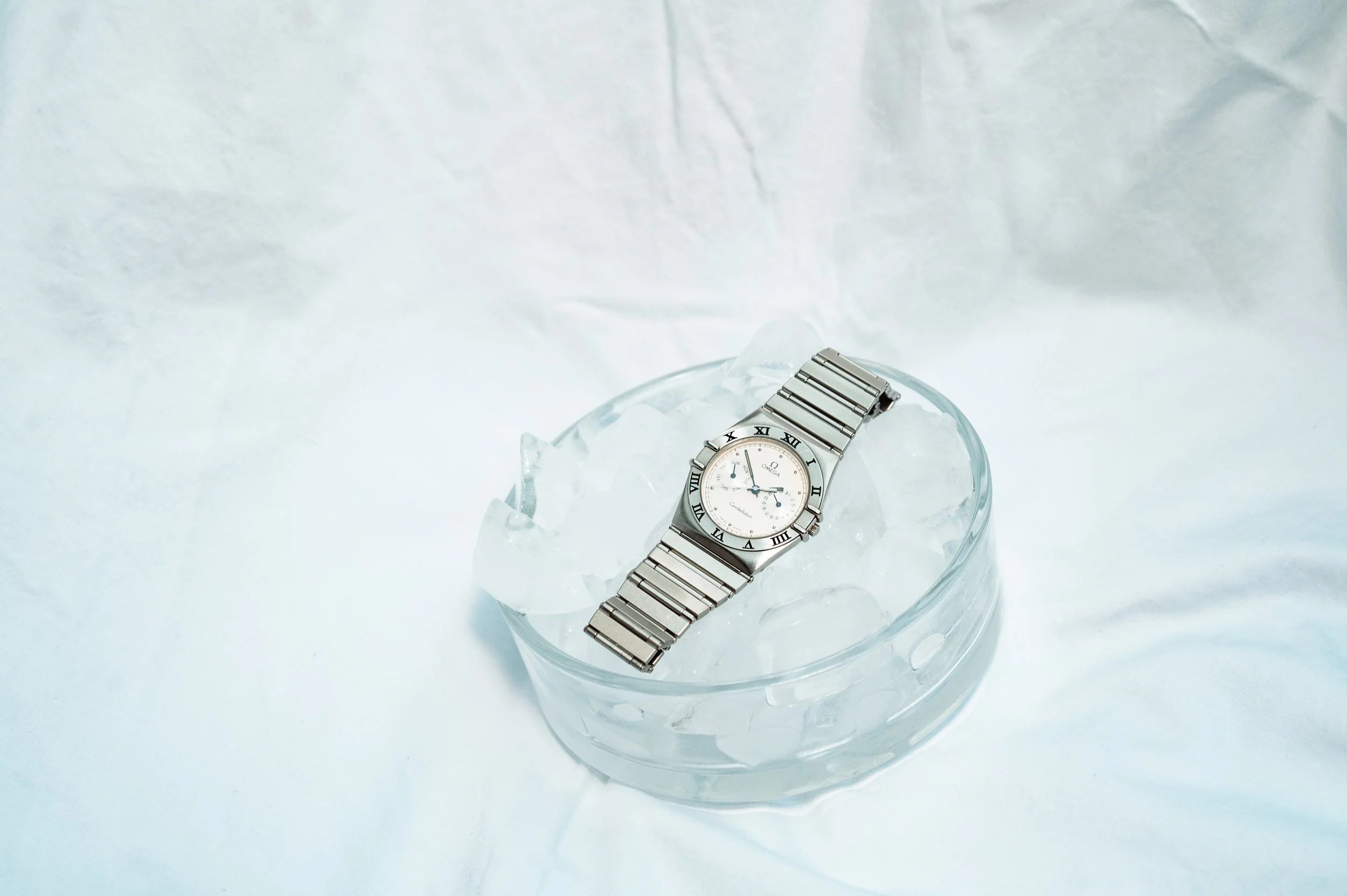
The new line evolved quickly, moving the characteristic roman numerals to the bezel and introducing two-tone and precious metal variants. They also introduced different complications, like in my late 80s example (pictured), commonly referred to by collectors as the “Owl” owing to its distinct day and date subdials, reminiscent of an owl’s piercing eyes.
With a Manhattan conceivably for everyone, these quickly became popular watches to mark life occasions or to gift, and are still a relatively common sight on wrists today. I recall asking a colleague at an old job about her yellow gold 90s Manhattan, a gift from an old boss from her days working, rather fittingly, in New York.

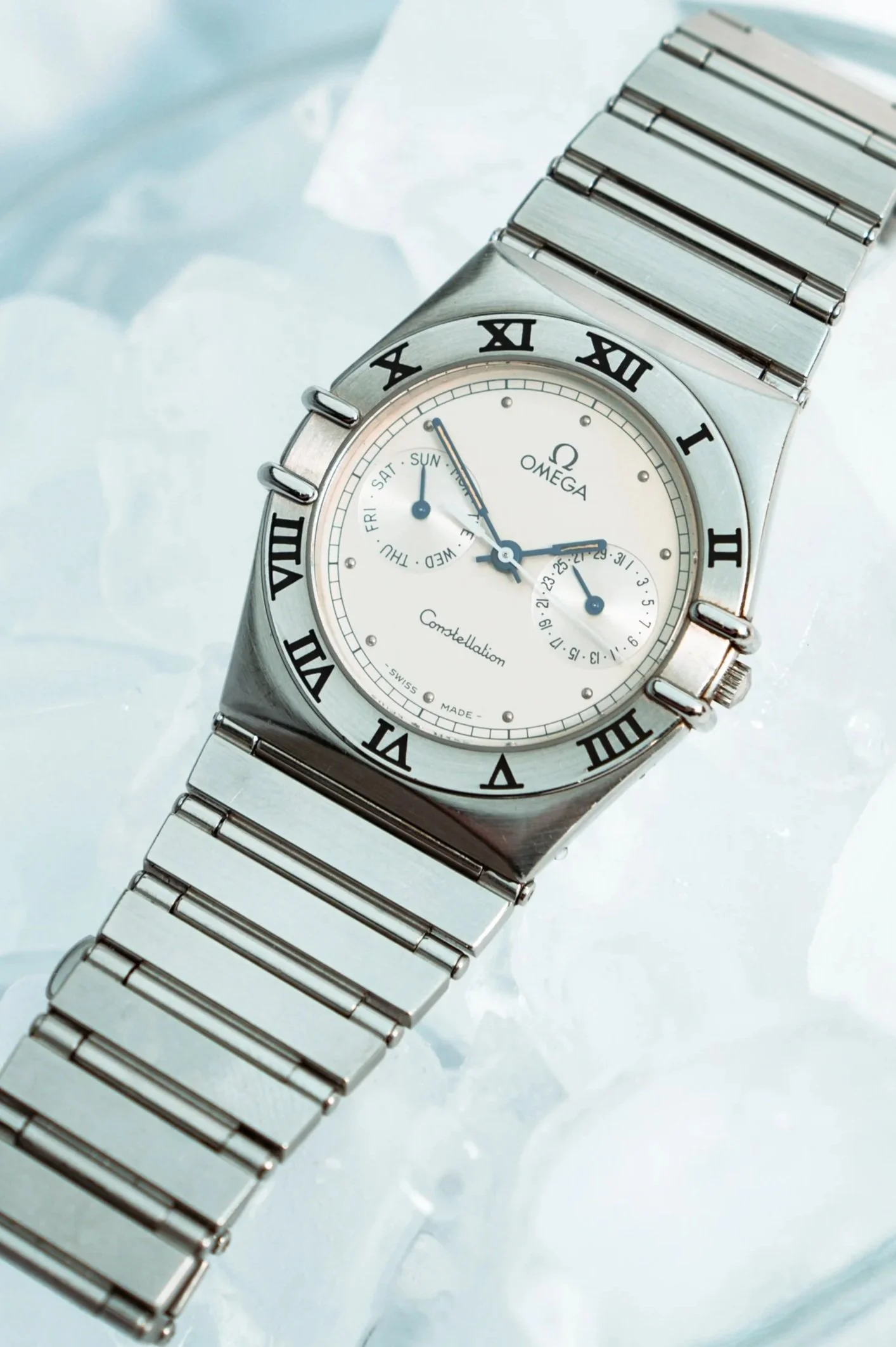
To wear, it’s no surprise the Manhattans have endured; it’s just so comfortable! Its case is so thin and integrates into the single wide-link bracelet well, thanks to the scallops that allow the first link to hug the wrist. The brushed bracelet tapers perfectly down to a hidden clasp with a clever sliding mechanism that makes it a breeze to take on and off.
On wrist, the design has a strange presence to it. The constituent, disparate parts of a roman numeral bezel, claws on the case, day and date subdials and a single-link bracelet shouldn’t work together, but these parts combine to a watch that’s full of surprises and never gets boring to admire. In my opinion the subdials on this ‘Owl’ model are the icing on the cake. On most watches, a day and date complication would occupy windows cut into the dial (think the eponymous Rolex Day-Date), but these subdials resemble a chronograph layout. However, with no pushers on the case for a chronograph it tricks the eye at first glance and adds to this watch’s unique look. Add in the blued hands and slightly off-white, slightly metallic eggshell dial and I’m finding my other watches being neglected as I wear the Manhattan more days than not.
Recently a wedding invitation with the dreaded black-tie dress code found itself in the letterbox. Running some errands on the summery morning of the occasion in shorts and a linen shirt, the Manhattan was the easy choice to jet around town before going home to dress for the wedding. After dusting off the black tuxedo and looking for the right watch for the outfit the Manhattan was the obvious choice; I can think of few watches that work in every occasion and outfit as well as a Constellation Manhattan.
The watch world has a habit of mythologising its designers - think Emmanuel Gueit and Gerald Genta (whom the Manhattan design is often falsely attributed to) - so it is surprising that Carol Didisheim’s name and amazing watch designs aren’t widely appreciated. With that said, we’re experiencing a groundswell of interest in the Constellation Manhattan as 90s designs see more appreciation, especially in fashion circles. Charlie Puth wears a two-tone model, as does Devon Lee Carlson, and prices for those haven’t yet reached unattainable levels. As more people discover the charm of Carol Didsheim’s designs, expect to see much more of the Omega Constellation Manhattan.
You may also like
-
![]()
A Lynchian Dream: Haus Nowhere
Seoul sets a new standard for retail activations.
-
![]()
The Rolex Oyster Perpetual Pistachio could be the perfect everyday watch
This green doesn’t shout, it whispers.
-
![]()
Coveted Object: Arno Coffee Cups
“If you’re going to have an apple, make sure it’s the crunchiest, juiciest apple you can find.”
-
![]()
Going Big, Bold and Bright with the Doxa Sub 300T Divingstar
Unapologetic in its purpose, the Doxa Sub 300T brings an authenticity rarely seen from other watches.
-
![]()
A House Amongst The Trees: The Lobster Bay House
A beautiful reminder of the magic that great architecture has.
-
![]()
Getting Stoned with the Dennison A.L.D
Dennison is here to democratise stone dials, and we’re all for it.