Going Big, Bold and Bright with the Doxa Sub 300T Divingstar
Words + Photos: Jack Shepherdson
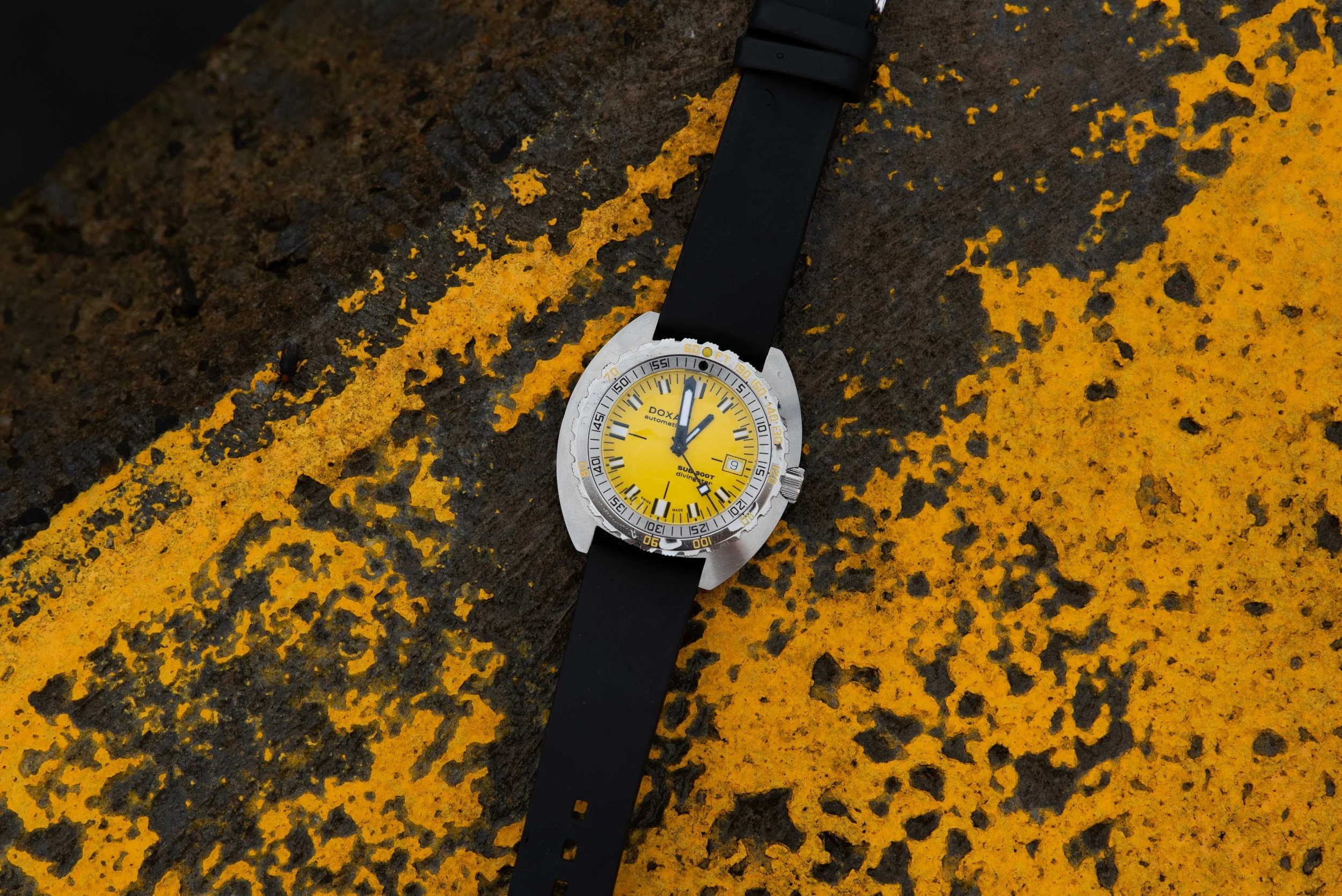
Small watches are deeply in vogue right now. Petite, precious metal Cartiers and itty-bitty Royal Oaks currently rule the social feed and the runway. But this is a 42mm, bright yellow-dialed, technical, steel dive watch.
Whilst everyone's busy zigging, let’s explore the zag.
Pedigree goes a long way in the watch world and the Doxa Sub 300T has that in spades. More importantly, no watch expresses itself quite as loudly and proudly as a Doxa. This is a purpose-built, no-nonsense dive watch designed specifically for those living an aquatic life, so ubiquitous it was essentially considered ‘standard issue’ for divers, oceanographers, sailors and surfers for over 50 years. Whilst this personality is loud, it’s also charming, and that charm is born from purpose.
As diving technology advanced in the mid-20th century, the exciting new recreational sport of Scuba diving emerged, allowing anyone to explore underwater. In the early to mid 1950s, four brands were fighting to be the watch of choice for those taking to the depths: the Rolex Submariner, the Omega Seamaster 300, the Blancpain Fifty-Fathoms and the Zodiac Sea Wolf. All round cased, black dial watches with a rotating timing bezel to track dive times and luminous dial and hands. A uniform template was emerging.
Those aforementioned watches were designed to dive, but they served an arguably more important purpose - to look good at the swim-up bar. Especially for the Rolex, as they were sold in jewellery stores after all.
The Doxa was not designed to go anywhere near the bar. Its strictly functional design was created to solve the headaches that divers faced. This resulted in a design language wholly unique to Doxa, defined by a series of clever features:
An enlarged minute hand and smaller hour hand, because when you’re diving the hours don’t matter, but minutes are vital;
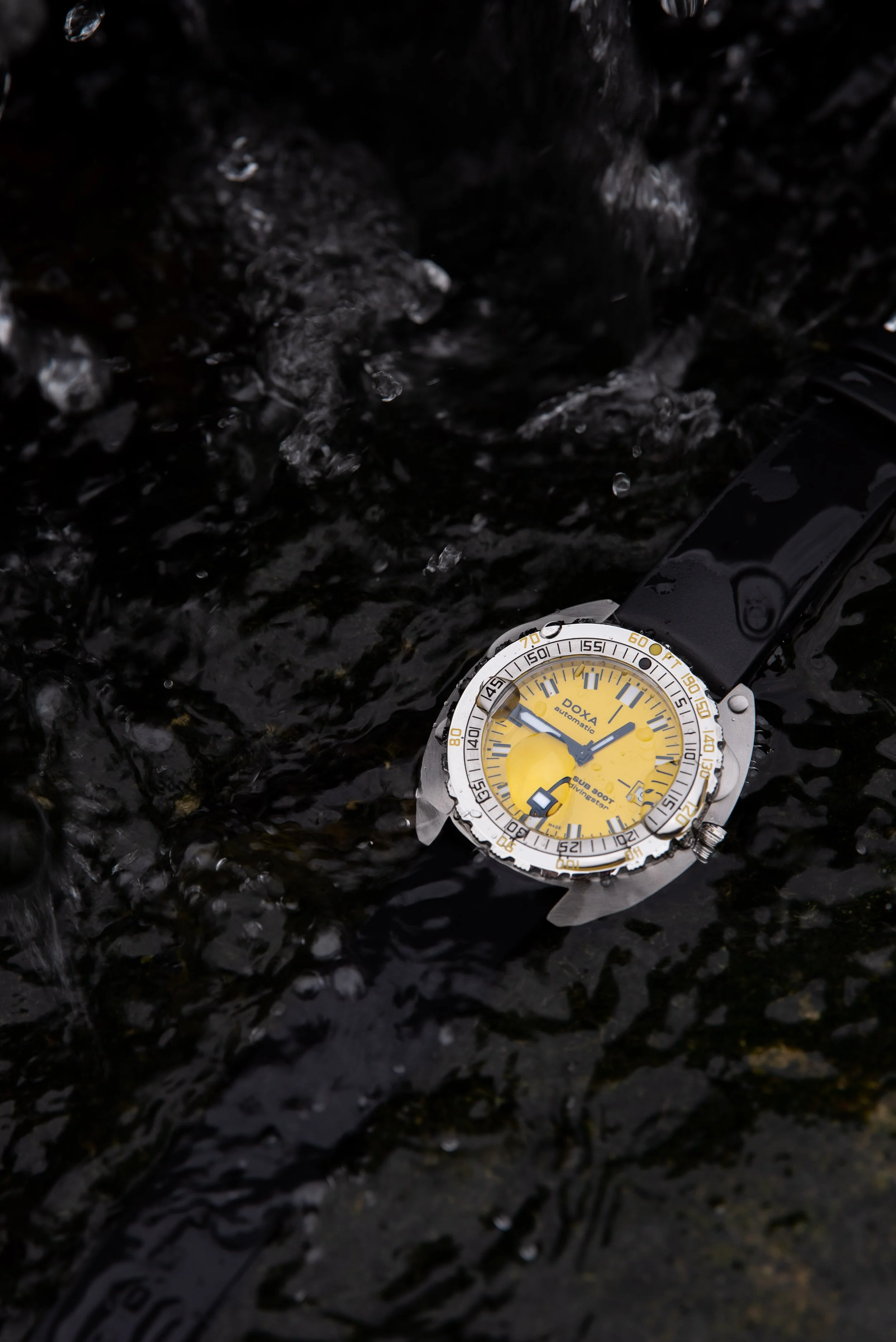
A saw-tooth bezel for better grip, plus a no-decompression scale engraved on the bezel for timing how long to take to resurface to avoid decompression and the bends; and
A first-of-its-kind spring-loaded ratcheting clasp allowing the watch to be worn over a wetsuit, with the bracelet resizing easily.
By going function-first, Doxa created a totally unique design language. And it was good.
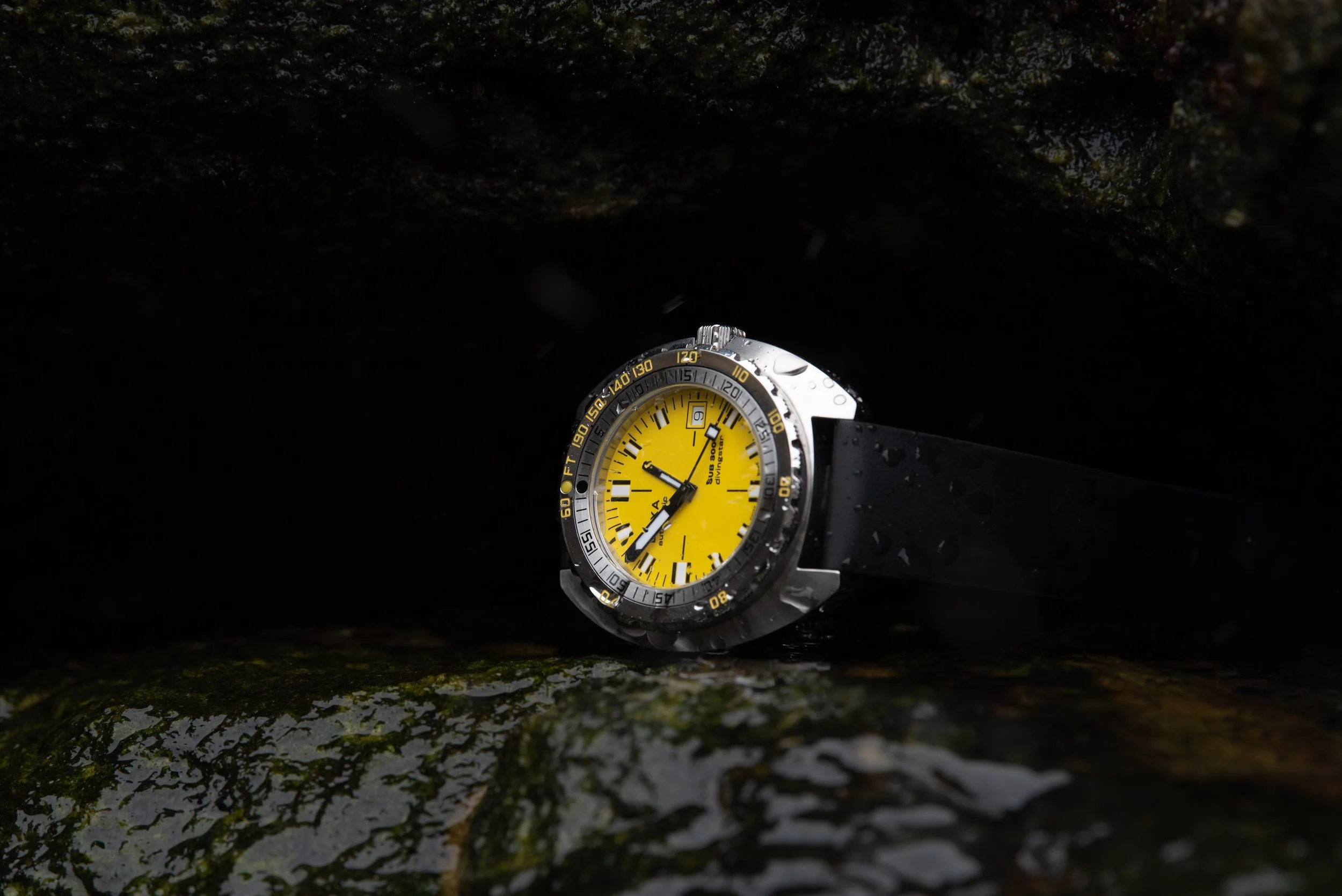
To cap off their new design, Doxa experimented with some brightly coloured dials, landing on their signature orange seen on the ‘Professional’ model. These colours served a legibility function, because orange is the last colour on the light spectrum to disappear as a diver descends underwater into the dark. Alongside the orange Professional, Doxa also offered the Sub 300 with three further colours: Silver (Searambler), Black (Sharkhunter) and this one, the Yellow (Divingstar).
With undeniable rugged charm, the Sub 300 quickly earned two famous owners, one real and one fictional: oceanographer and filmmaker Jacques Cousteau, and the main character of the Clive Cussler adventure novels, Dirk Pitt (with inspiration taken from the wrist of the author, Clive Cussler). Cousteau in particular found himself so enamoured by the charm of the Doxa that he negotiated exclusive distribution of the watches in the US, placing them on the wrists of the Calypso dive team for their global expeditions filming undersea.
History lesson over - let’s explore what it’s like to wear a Doxa Sub 300T Divingstar today.
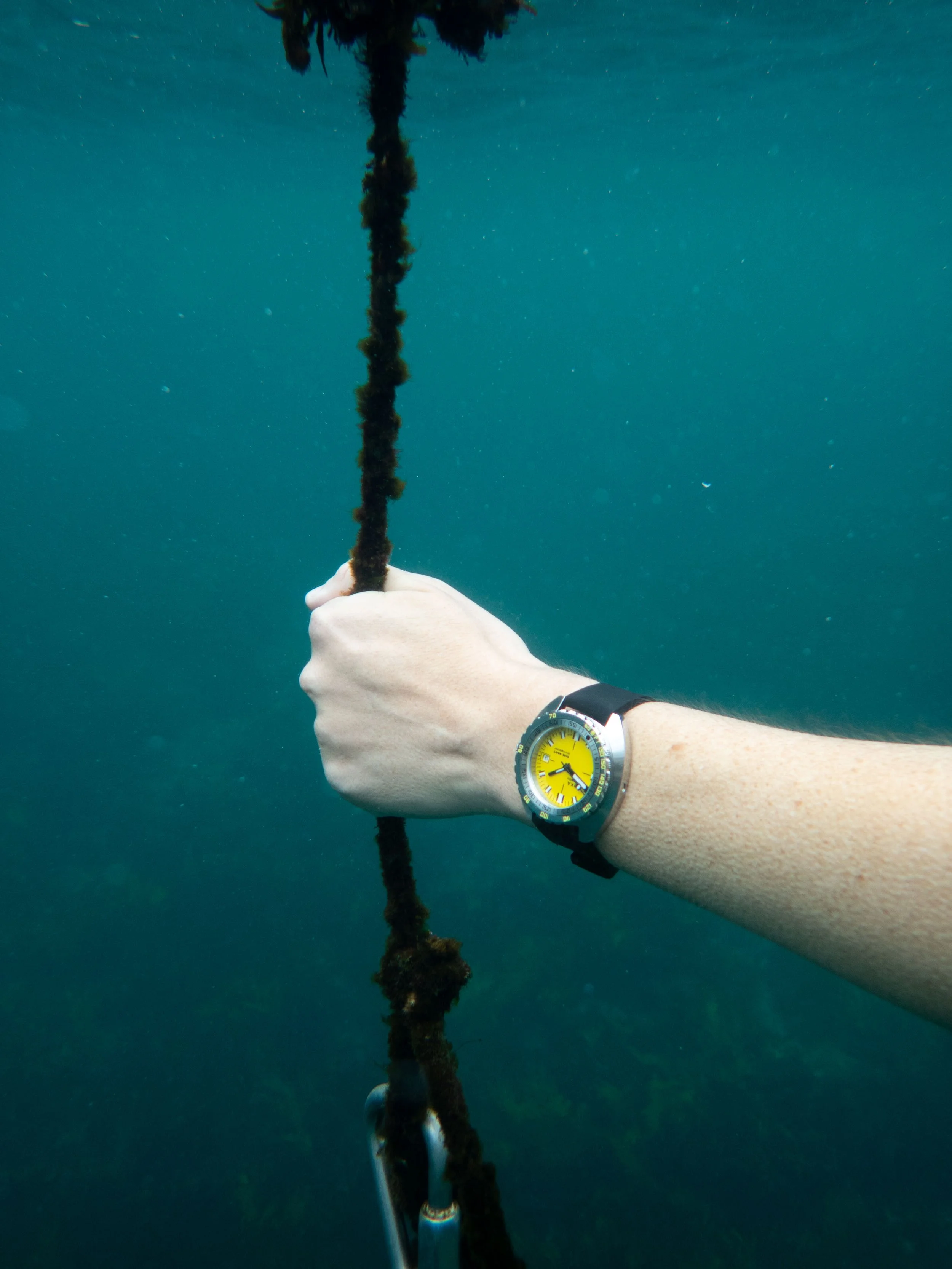
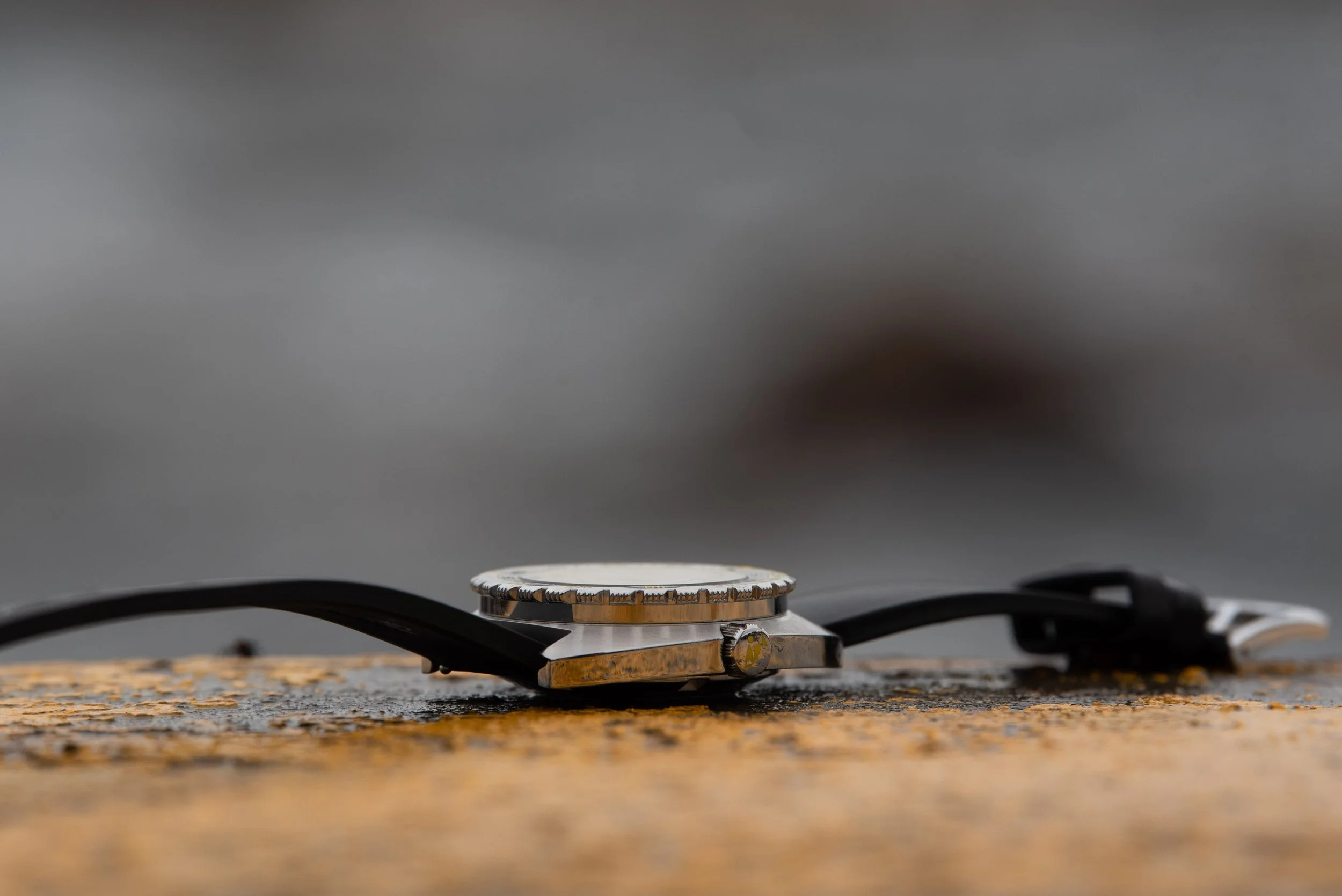
It’s big, but by being a strictly functional object it shakes off any sense of peacocking or ego associated with, for example, the Rolex Submariner. On the wrist, the Doxa creates a bit of an optical illusion, wearing much thinner than expected with a flat case and crystal that hugs the wrist tightly. The interplay of such a small dial nestled inside a comparatively large case makes the Sub 300T appear smaller than its dimensions would lead you to believe, yet it’s still dripping with a larger-than-life, globetrotting, salty attitude.
If comfort on wrist is a concern, take the Doxa off its characteristic beads-of-rice bracelet and pair it with a rubber strap, and its weight is halved, plus you’ll draw attention to those sharp lugs and case shape.
If you find the Sub 300T still too large to accompany you from a snorkelling trip straight to dinner, Doxa have already solved the problem with a few options. The Sub 300 (no T) is an exact copy of the first and thinnest Doxa dive watch, and whilst it loses the helium-escape valve on the side of the case (useful for very serious, mixed-gas diving, a technical achievement nearly no diver truly requires) it also slims down by half a millimeter; a small change that makes a big difference. Doxa’s other solution for those who prefer a smaller fit? The Sub 200T, simply a shrunk-down 300T at 39mm, which could be the sweet spot for many who want the design and functionality of the Doxa without making such a bold statement.

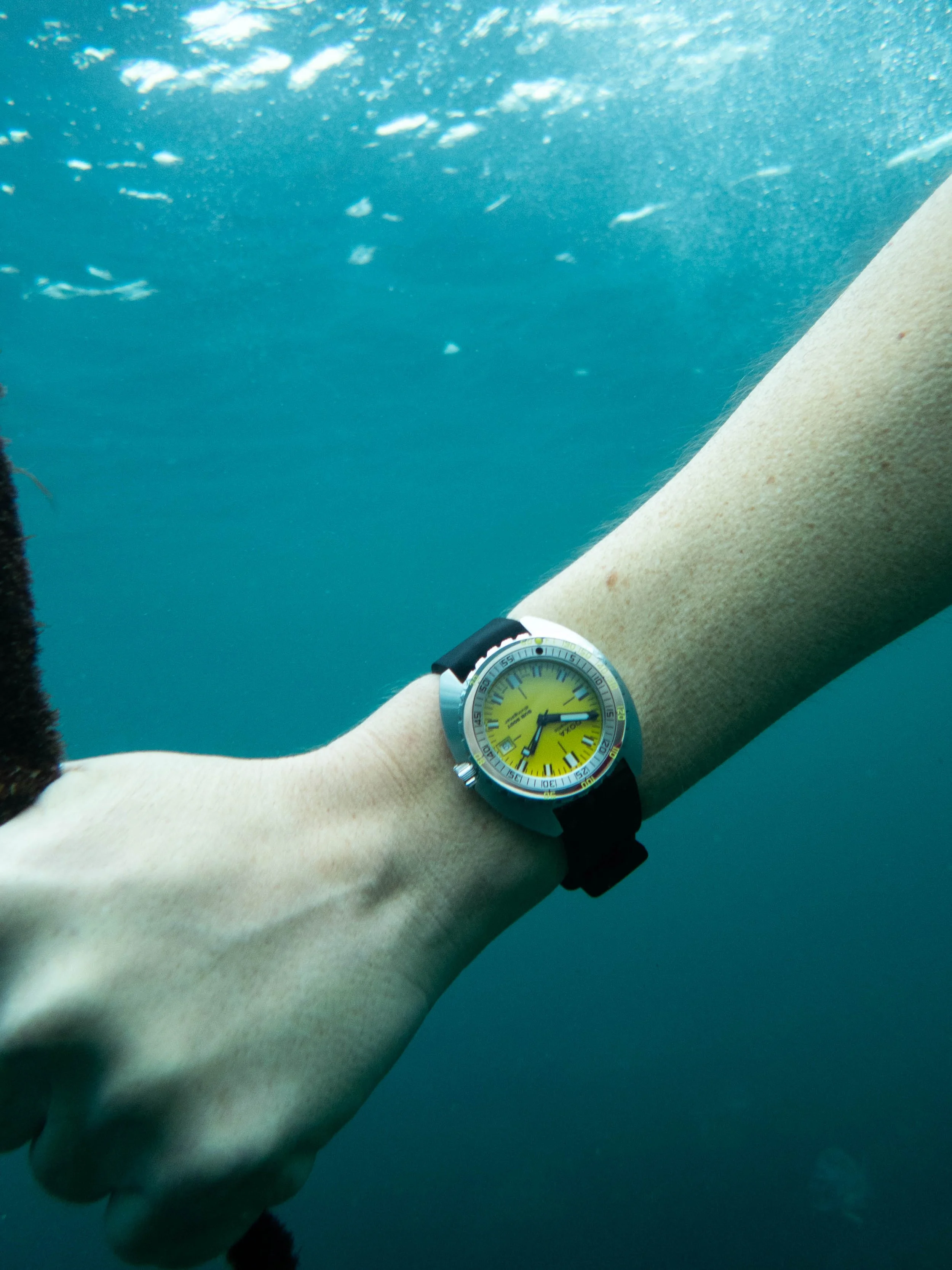
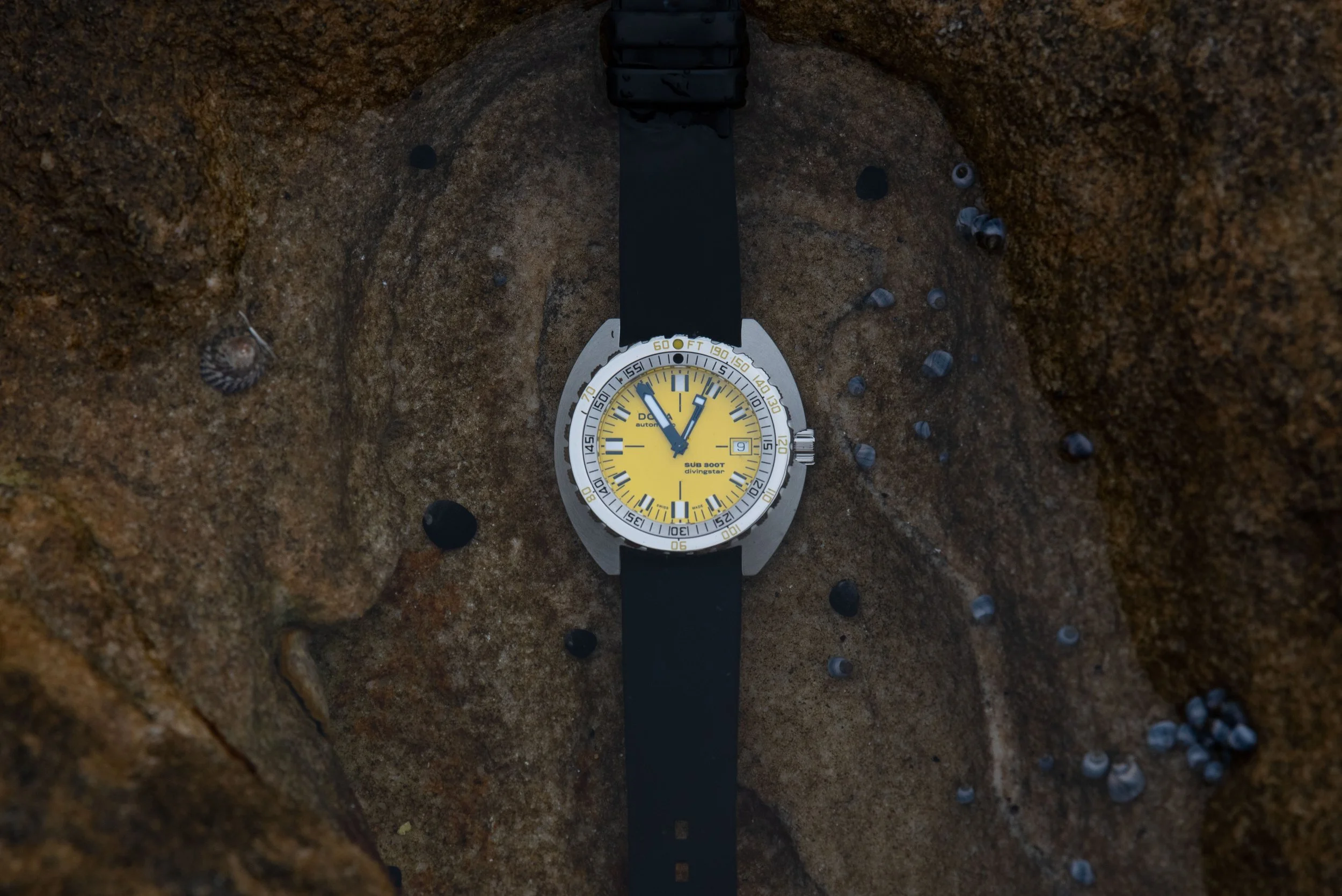
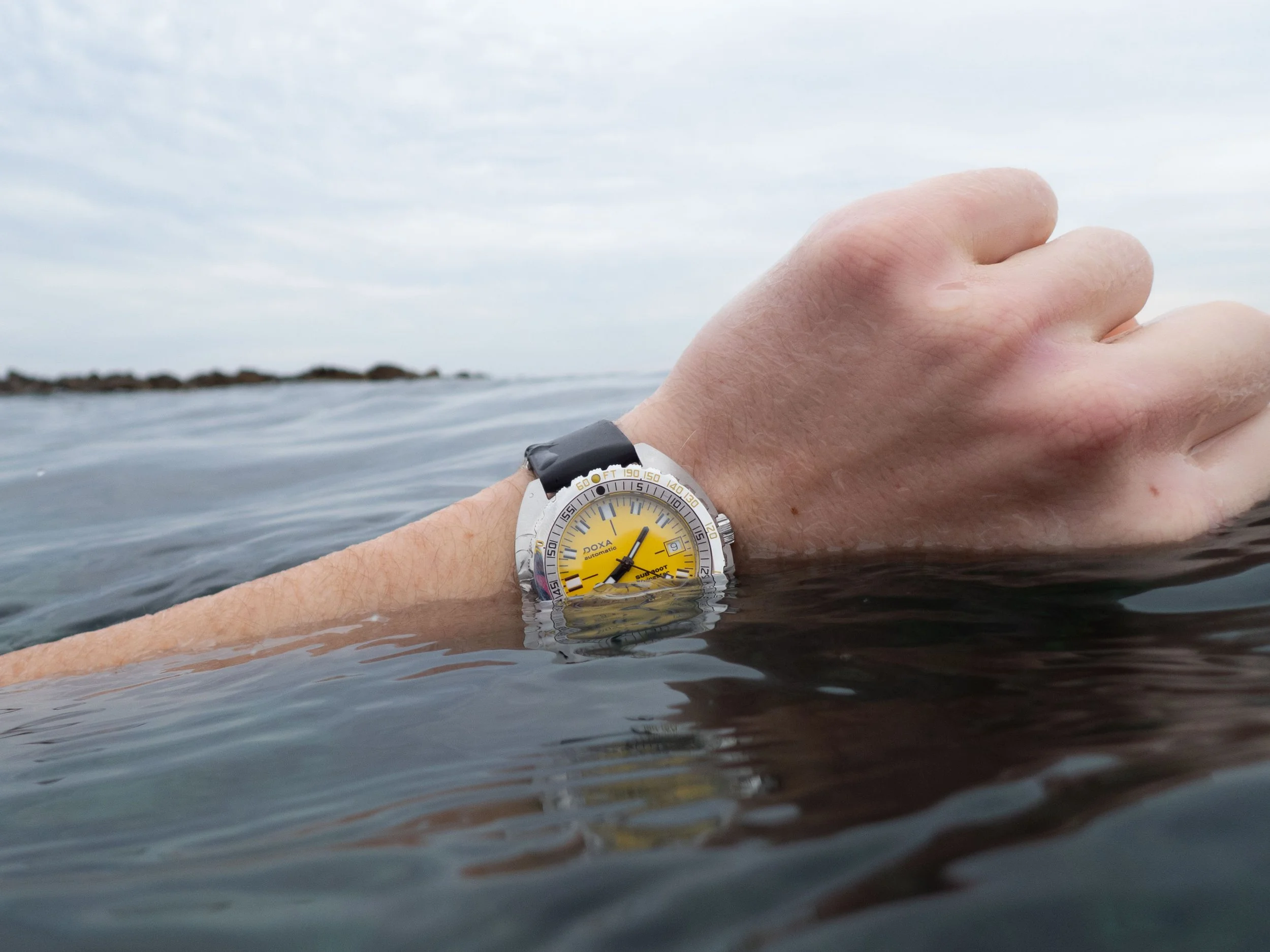
The yellow Divingstar dial is such a rich colour that shines nicely both above and below the water. It’s not a fluro yellow, but a rich, mid-tone that pops against the black logo and text. Very few of the available dial colours feature colour-matching enamel on the bezel, and it really is the icing on the cake for extra pop on this watch.
An equally important aspect of the iconic Doxa design is the beads of rice bracelet present on Doxa Subs since the beginning, which over time has been significantly beefed-up from the delicate, dainty vintage bracelets. Doxa has made the modern bracelet bigger to make it stronger, but what it gains in strength it also gains in weight and chunkiness, especially around the clasp.
The bracelet’s pitfalls are far from an overall dealbreaker for the Sub 300T. Put it on and jump into the ocean and any concerns are washed away. A brilliant dive watch shines through. If you find the bracelets heft truly impossible to bear, the Doxa wears excellently on rubber and nato straps. Doxa even offers an optional integrated rubber strap that comes in matching dial colours.
I have a theory that you either love or hate the Doxa Sub 300T. If you love it, that’s probably down to its romantic notions of the past, a time when divers were putting their lives on the line and Doxas on their wrists. Arguably, the Doxa played a bigger part in developing the culture of diving than any other watch. No one accidentally has a Doxa - wearing one signifies some knowledge and a deep love of the ocean.
It’s unapologetic in its purpose, which brings an authenticity rarely seen from other watches. If you’re in the market for a dive watch with actual heritage, try a Doxa Sub 300T on for size.
You may also like
-
![]()
Coveted Object: Omega Constellation Manhattan
While all Omega Constellations are created equally, some are more equal than others.
-
![]()
Coveted Object: Arno Coffee Cups
“If you’re going to have an apple, make sure it’s the crunchiest, juiciest apple you can find.”
-
![]()
A House Amongst The Trees: The Lobster Bay House
A beautiful reminder of the magic that great architecture has.
-
![]()
Getting Stoned with the Dennison A.L.D
Dennison is here to democratise stone dials, and we’re all for it.
-
![]()
The Rolex Oyster Perpetual Pistachio could be the perfect everyday watch
This green doesn’t shout, it whispers.
-
![]()
Scorpio By Name & Nature: The Abarth 695 Competizione
A jellybean-shaped muscle car that oozes charisma.