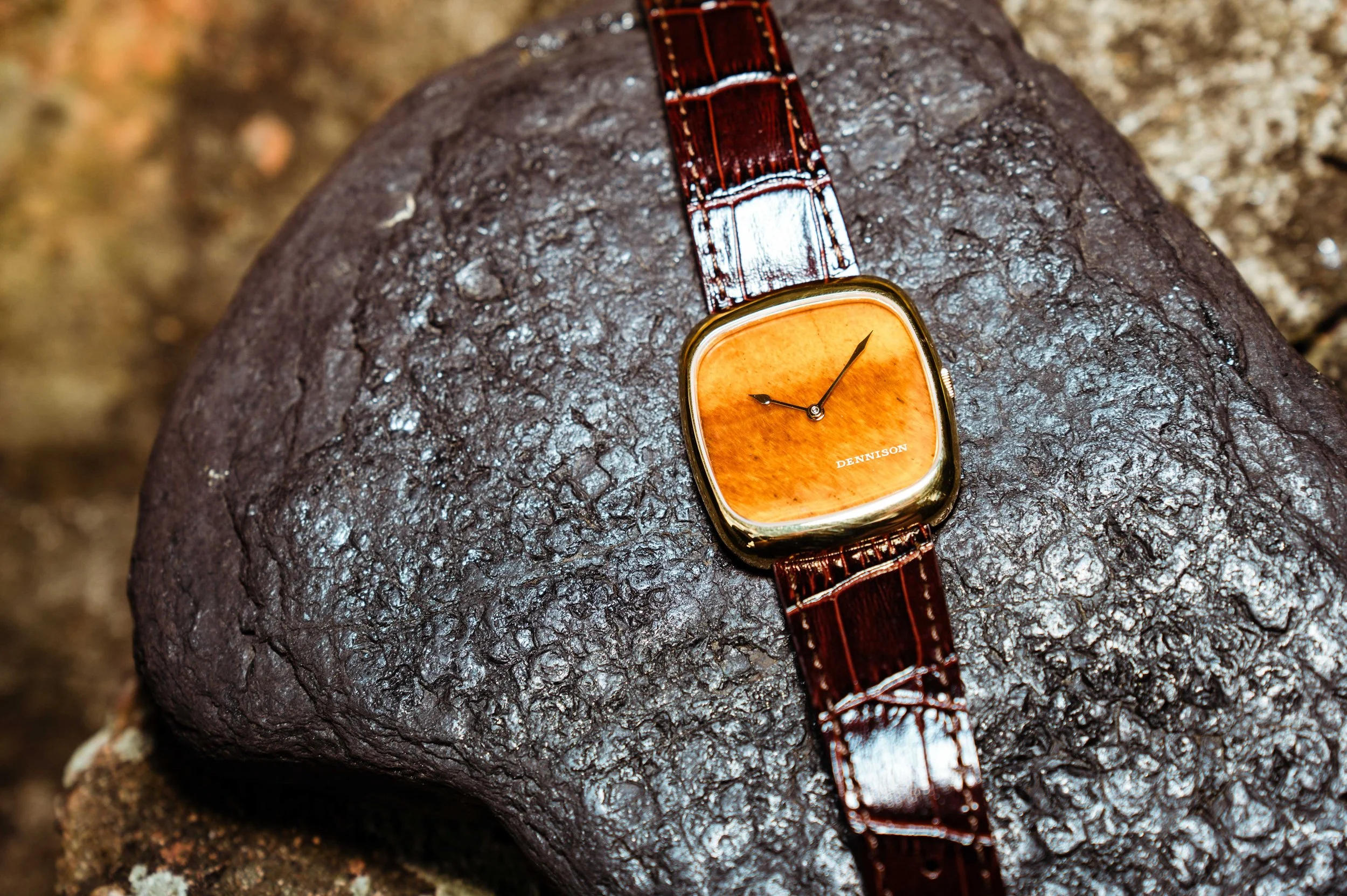
Getting Stoned with the Dennison A.L.D
Words: Jack Shepherdson
Photos: Georgia Griffiths
Stone dial watches have always existed in rarified air. In their 70s heyday, stone dials were reserved exclusively for precious metal pieces from the likes of Piaget, Rolex and Audemars Piguet. They were often made in such low quantities you could count most examples of them on one hand. Today, you’d be lucky to see one outside of the pages of a Phillips Auction catalogue.
Dennison is here to democratise stone dials, and I’m all for it.
After decades of obscurity, even for the old guard of watch collectors, we’ve finally seen interest explode for vintage watches with stone dials. There’s well-overdue appreciation for the amazing splashes of colour and intrigue they bring, and unlike the well-trodden path of vintage Rolex sports watches, the level of scholarship for stone dials is nowhere near as fleshed out. Collectors today still don’t know of every variant of vintage Rolex stone dial watch made, with new pieces popping up for sale regularly, usually unique examples that the collector community never knew existed.
With such murkiness in the vintage world of stone dials, yet such a recent clamour for them, it’s brilliant to see a handful of micro-brands embrace fun, colourful stone dials at the affordable end of the market for the first time ever. Amongst a few other players, Baltic jumped on the trend with three stone dial variants of their excellent Prismic, though each variant was limited to just 200 pieces. Enter Dennison watches, now offering a range of stone dials in their A.L.D range, all priced just a smidge over AUD$1,000.
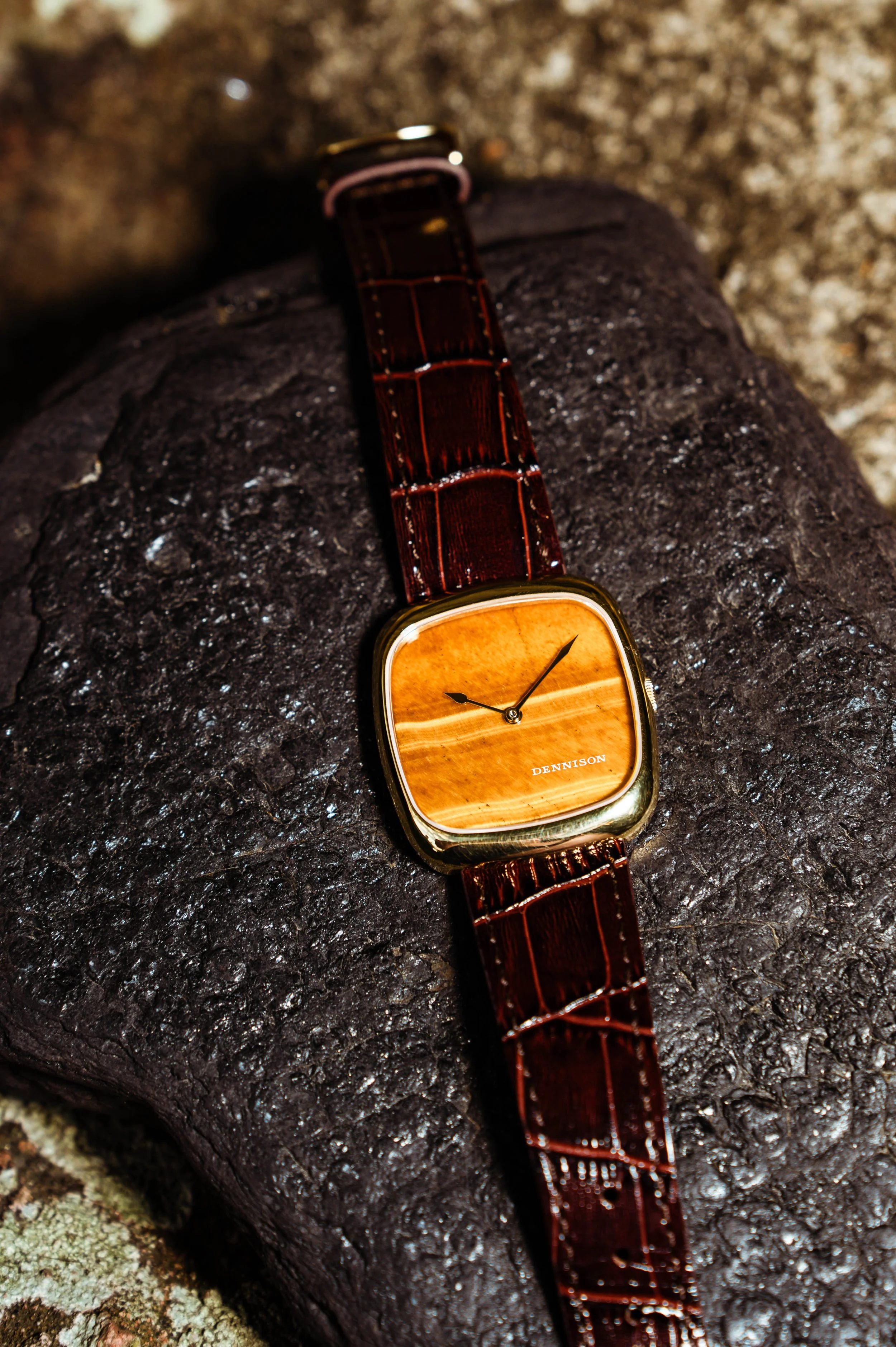
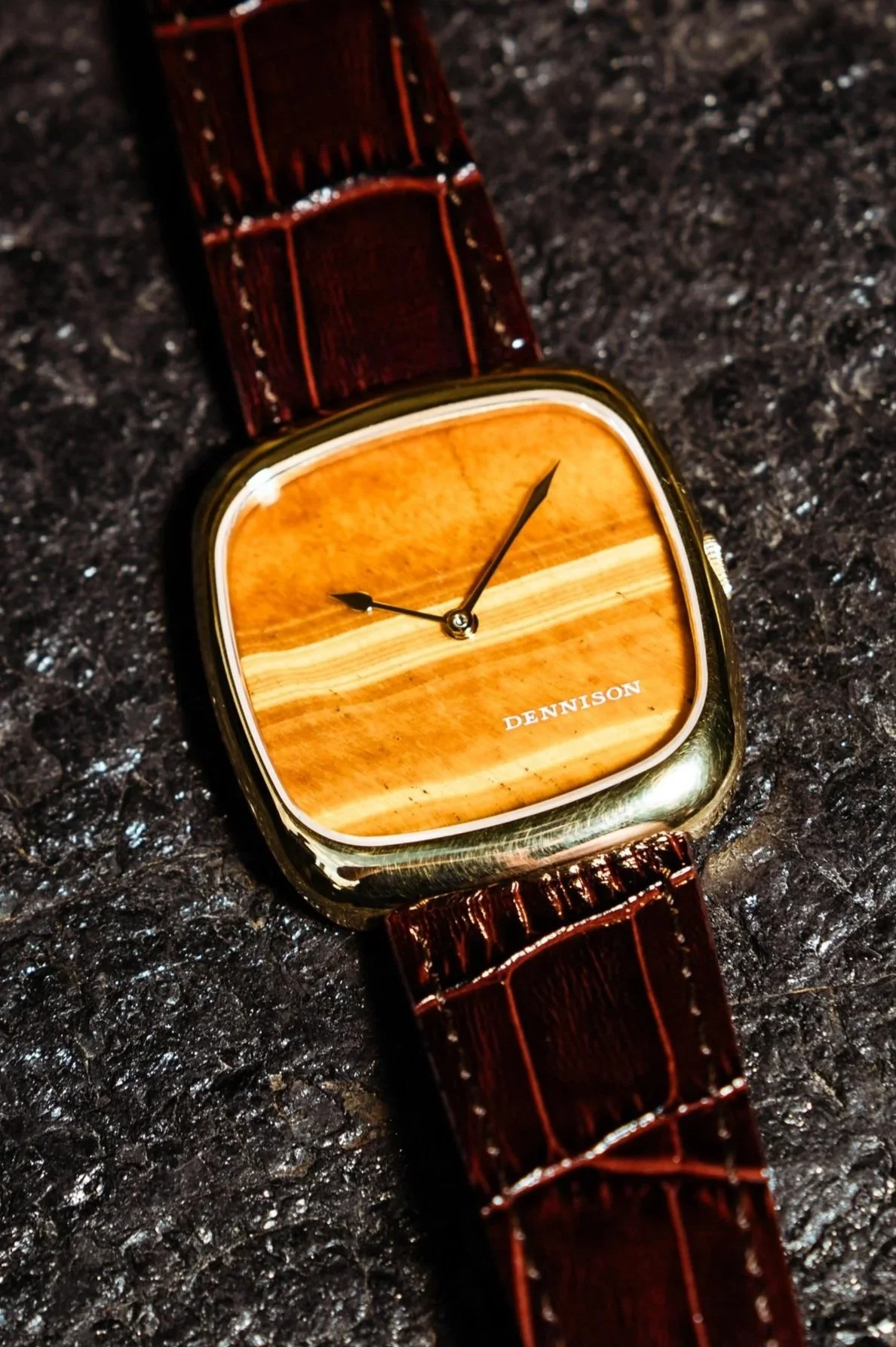
Red Agate, Rubellite, Aventurine, Malachite, Lapis Lazuli, Bloodstone and Tiger’s Eye. They’re all here, so take your pick! All dial colours are available fitted in either a steel or PVD-plated yellow gold case. My choice was the Tiger’s Eye in yellow gold (pictured).
One of the joys of stone dials is their individuality. Being a naturally formed material, no two stone dials are identical, so every single Dennison is unique. The Tiger’s Eye has a gorgeous lustre and depth to it, transitioning from looking like a rich timber in low light, to having its striations blast your eyes as sunlight hits it. Turn your wrist and you’ll see more of the stone glisten as the light changes, almost like it’s winking at you.
Whilst the whimsical dial is very much the star of the show on the Dennison, the case is just as important, and the key to understanding where this ‘new’ brand has come from. Dennison can actually trace its roots back to 1872 as an English-based watch casemaker supplying watch cases to other brands, later going on to make cases for such brands as Rolex, Omega and Smiths. A Dennison-cased Smiths example was on Sir Edmund Hillary’s wrist on the first ascent of Mt Everest. Unfortunately, Dennison was one of the many victims of the 1970s Quartz Crisis, which is where the brief came for the new A.L.D: what would a Dennison have looked like if the brand survived into the late 70s?
To execute that vision, Dennison turned to Emmanuel Gueit to pen the A.L.D.’s form. Gueit is most famed as the designer of the Audemars Piguet Royal Oak Offshore, and his father, Jean-Claude Gueit, designed many of the avant-garde, sculptural 70s watches, including a particular AP that the A.L.D draws inspiration from. Think of this Dennison as Emmanuel’s loving tribute to his father’s designs.
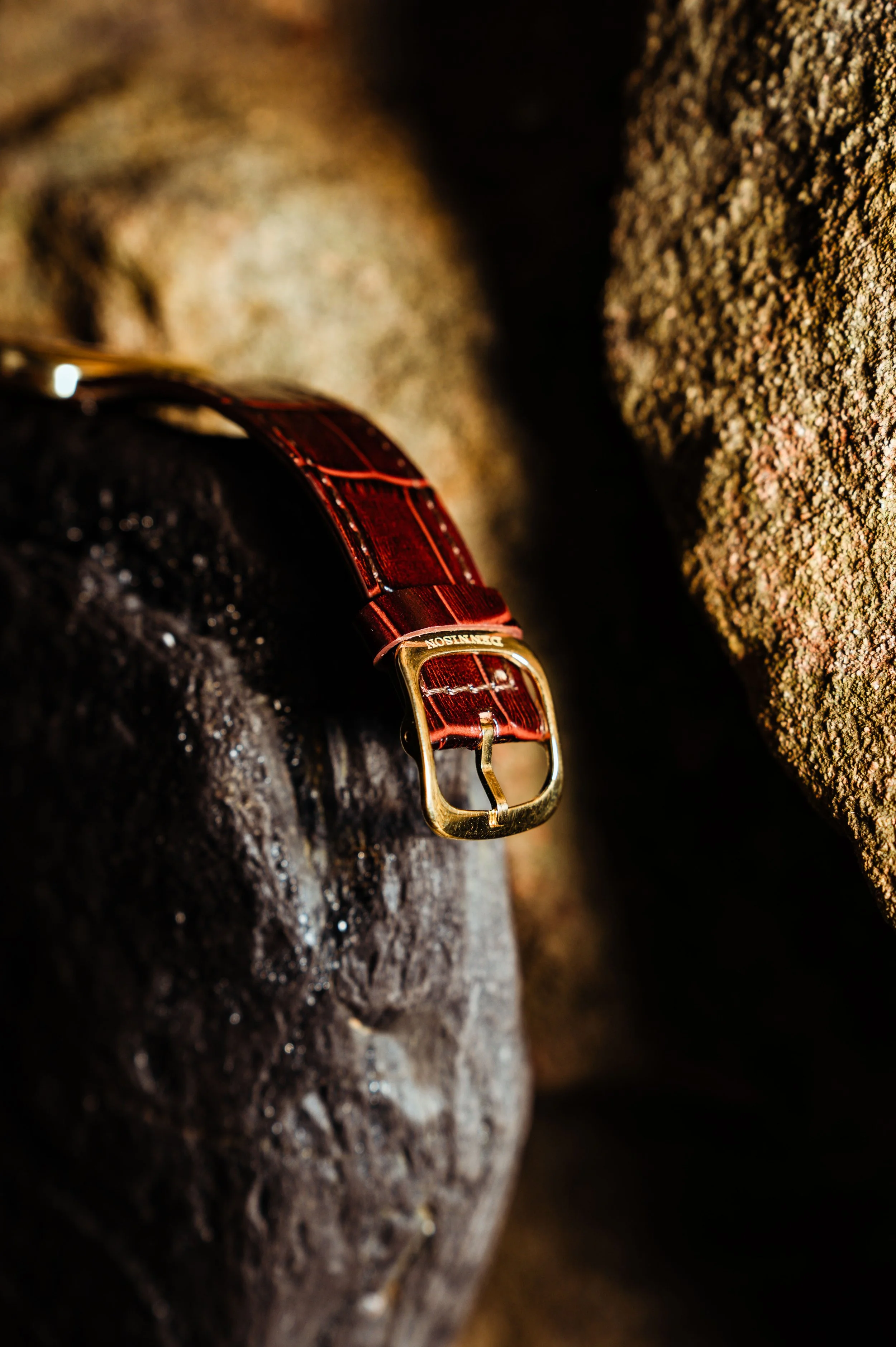
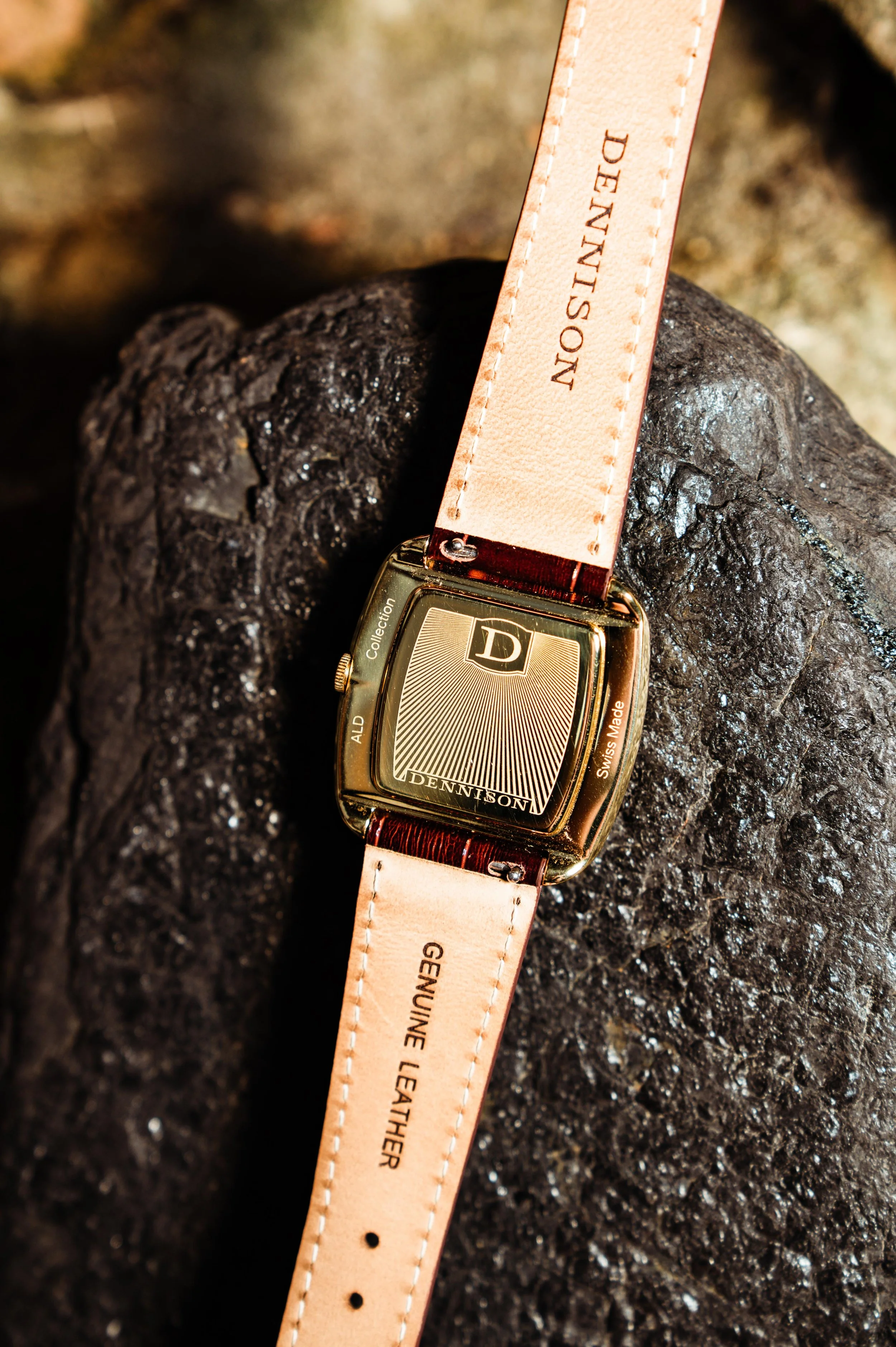
On wrist it’s truly fantastic. Only 6mm thick, it's unobtrusively sized and so light you often forget it’s even on your wrist. The TV-shaped case looks simple at first sight, but the more time you spend with it, the more you notice the attention to detail. I love how the crown sits near-flush with the case and how the strap is cowled under it. Looking down at how the leather strap interplays with the case, I like to imagine a globule of gold has dropped onto a leather bracelet and hardened to form a watch case. The shape is so organic, which beautifully complements the natural material the dial is made of.
Whilst looks could deceive a passerby that the Dennison may be a 70s precious metal, one-off AP or Piaget gigawatch, once you hold the watch you can understand how Dennison manages to price this watch around the $1,000 mark; it’s very light. It lacks the weight of the precious metal APs or Piagets it’s inspired by, and whilst this isn’t necessarily a bad thing, you don’t get the ‘feeling’ that it’s an expensive watch. This is partly down to the movement, which is a Swiss-made Ronda quartz, nowhere near as heavy or complex as those 70s mechanical movements. The Ronda quartz is still a high-quality movement, totally suitable for everyday use, and had Dennison opted for a more complex mechanical movement, the price would have been significantly higher. When it comes to Dennison, judging it based on the movement feels like missing the brief; with a design this gorgeous, what's powering it isn’t on my mind.
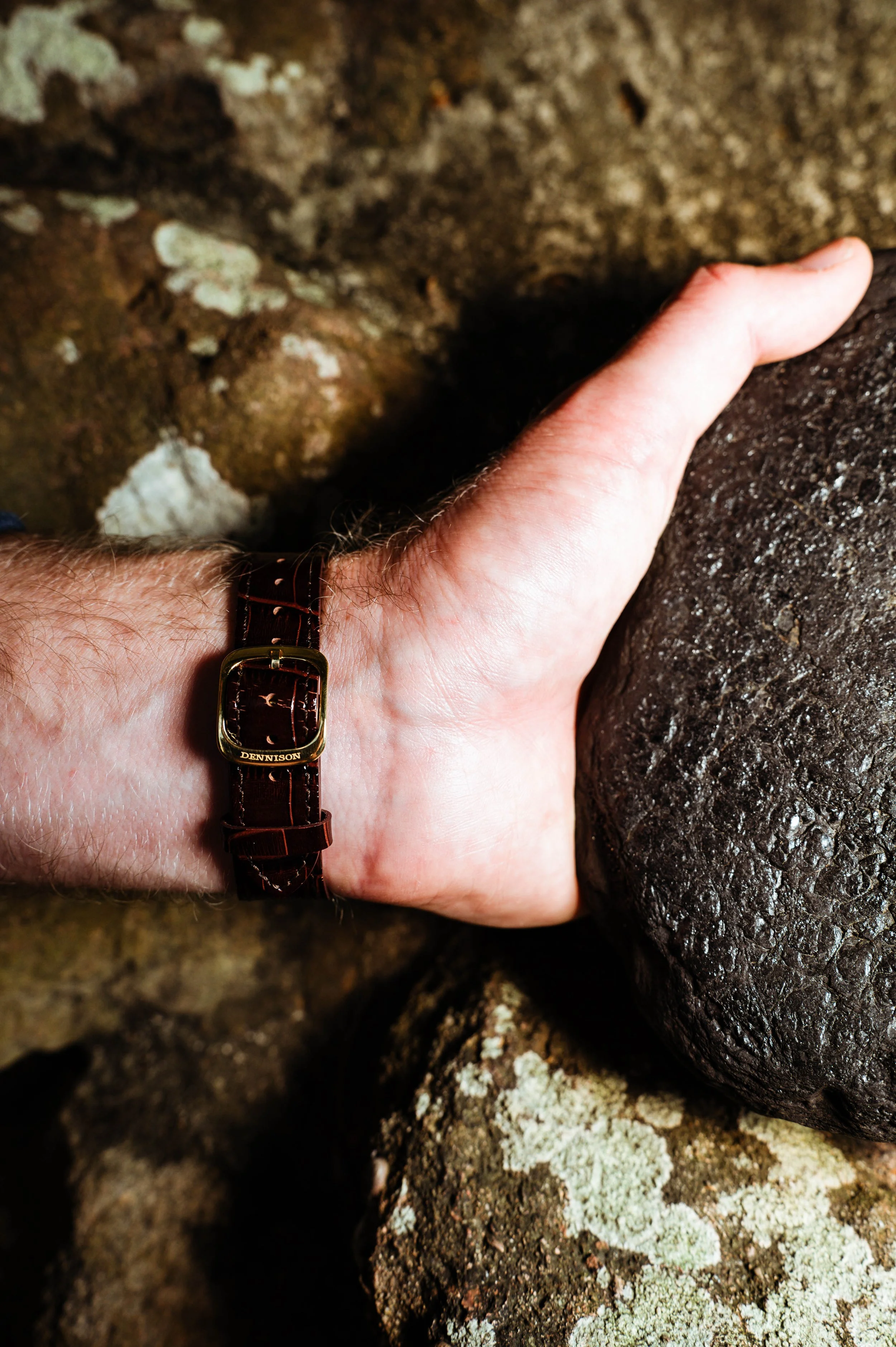
If you’re looking for a stone dial watch that draws on the amorphous case shapes so many brands experimented with in the 70s and 80s, in this price range, there really isn’t another option. That’s why the Dennison is such a breath of fresh air. It brings the absurdly out-of-reach world of stone dials back down to earth, allowing everyone to enjoy a taste of the magic of a stone-dial vintage watch that the Dennison draws inspiration from.
The A.L.D design has also proven to be modular, with two recent releases that build on this time-only watch. The first, the A.L.D Mini, is a smaller model available with some new stone dial variants and an optional diamond-set case. The second is the Dual-Time, which features two horizontally arranged mini dials in the same case with two crowns and two movements, so you can track two time zones at once. It’s basically two watches in one, and you can also opt for a dial with one type of stone or two.
The Dennison A.L.D will be bought by both heavy-duty collectors with hundreds of vintage watches in the safe, and by those looking for their first and only watch. It spans the entire spectrum, which is an exceedingly rare occurrence, and one Dennison should be praised for.
There’s only one problem: which stone to choose?
You may also like
-
![]()
Coveted Object: Omega Constellation Manhattan
While all Omega Constellations are created equally, some are more equal than others.
-
![]()
Going Big, Bold and Bright with the Doxa Sub 300T Divingstar
Unapologetic in its purpose, the Doxa Sub 300T brings an authenticity rarely seen from other watches.
-
![]()
The Rolex Oyster Perpetual Pistachio could be the perfect everyday watch
This green doesn’t shout, it whispers.
-
![]()
A House Amongst The Trees: The Lobster Bay House
A beautiful reminder of the magic that great architecture has.
-
![]()
Coveted Object: Arno Coffee Cups
“If you’re going to have an apple, make sure it’s the crunchiest, juiciest apple you can find.”
-
![]()
Scorpio By Name & Nature: The Abarth 695 Competizione
A jellybean-shaped muscle car that oozes charisma.