Coveted Object
Arno Coffee Cups
Words: Jack Shepherdson
Photos: Georgia Griffiths
“If you’re going to have an apple, make sure it’s the crunchiest, juiciest apple you can find.” That’s some of the best advice I’ve ever received. It speaks to a method of doing things, even the simplest things, in a way that elevates your daily experiences.
For me, one of those daily experiences is making a coffee or two, and whilst the coffee machine, the beans and the technique are important, the cup you drink it out of is just as, if not even more important.
My cup of choice is an Arno glass coffee cup, designed by the Italian industrial designer Joe Colombo in the 1960s.
Colombo revolutionised the landscape of product design, embracing new-at-the-time plastic moulding techniques and splashes of primary colour in a way no other designer ever has. He created a catalogue of furniture and homeware designs for companies like Allessi, Kartell, and in the case of this cup and saucer, Italora.
Designing in easily mouldable plastics and glass, Colombo’s designs follow a similar theme of chunky, exaggerated shapes and rounded edges, looking childlike in the use of colour and material, but incredibly radical and futuristic in its shape, like nothing else before it. Think his iconic Elda Chair, a favourite of Pharrell Williams, the modular Tube Chair, or his BOBY container-cart, which may as well be standard-issue for every architect on earth.


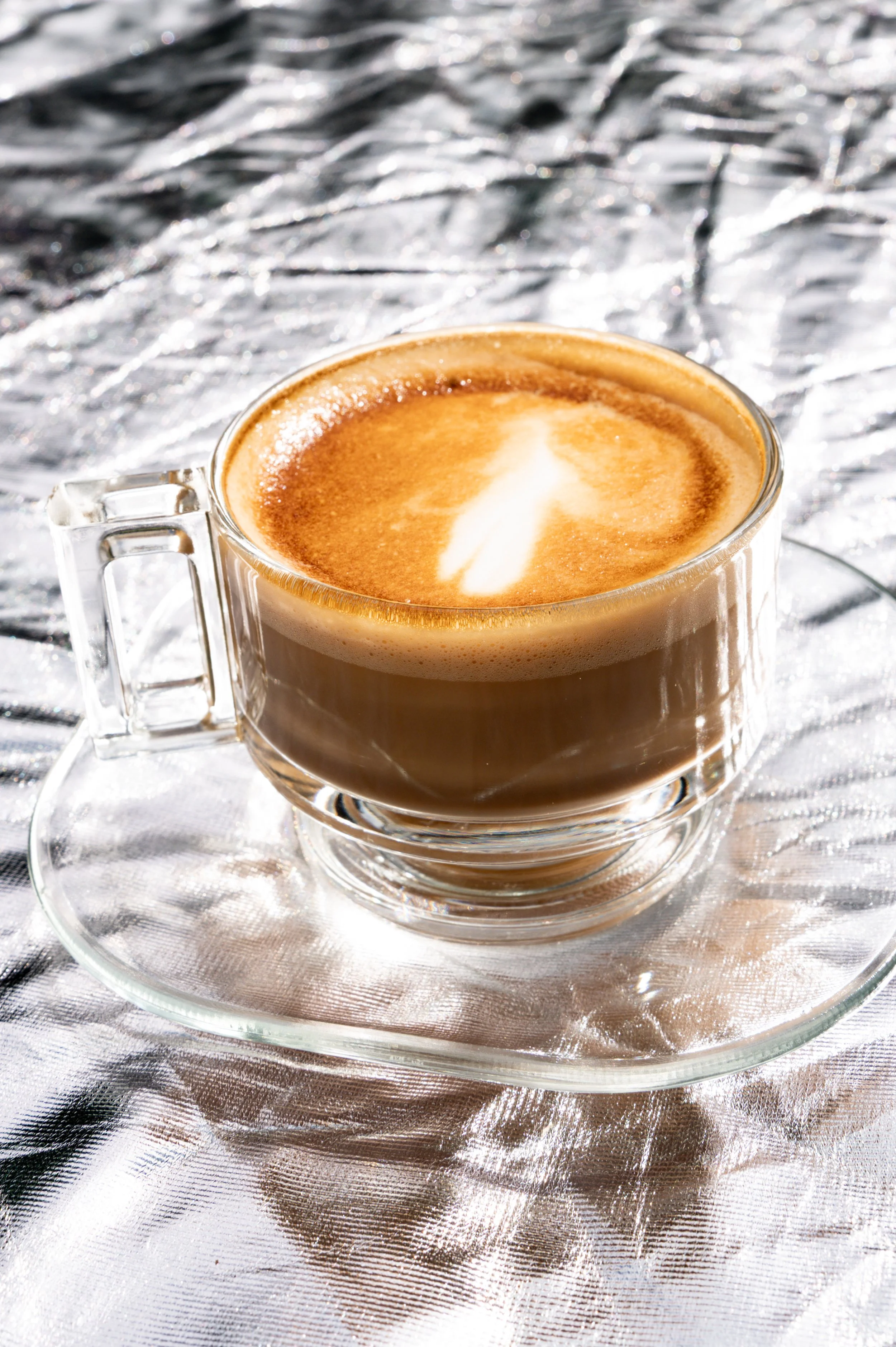

Colombo offered a glimpse into the future, drawing inspiration from the space race. After his death at just 41, his work became a part of sci-fi media in its own small way - the Arno were the coffee cups of choice for Ripley’s apartment in James Cameron’s 1986 sci-fi epic Aliens.
Back on earth, these Arno glass cups quickly became a popular homeware around the globe and were just one piece in a set stretching across shrunken down espresso cups, dinner plates, milk jugs, soup bowls and sugar bowls. The coffee cups were certainly the star of the lineup and are the most commonly found piece of Arno glassware today.
I’m a huge fan of Colombo’s work and the Arno cups have been a staple of my daily coffee routine for a few years. I love the space-race design and much prefer drinking out of glass over ceramic, and I love that they are so incredibly Italian. Given the Italians birthed coffee culture, it makes sense to use their tools, plus drinking from an Arno cup every day fills me with joy and positive energy - not just from the coffee.
Finding your own set of Arnos isn’t a huge challenge, as enough were made that even in Australia they’re regularly found in antique stores, and are always available on eBay. I’ve seen stacks of them in antiques stores, though my set of six cups and saucers came from eBay for a steal, wrapped alongside some great architecture magazines.
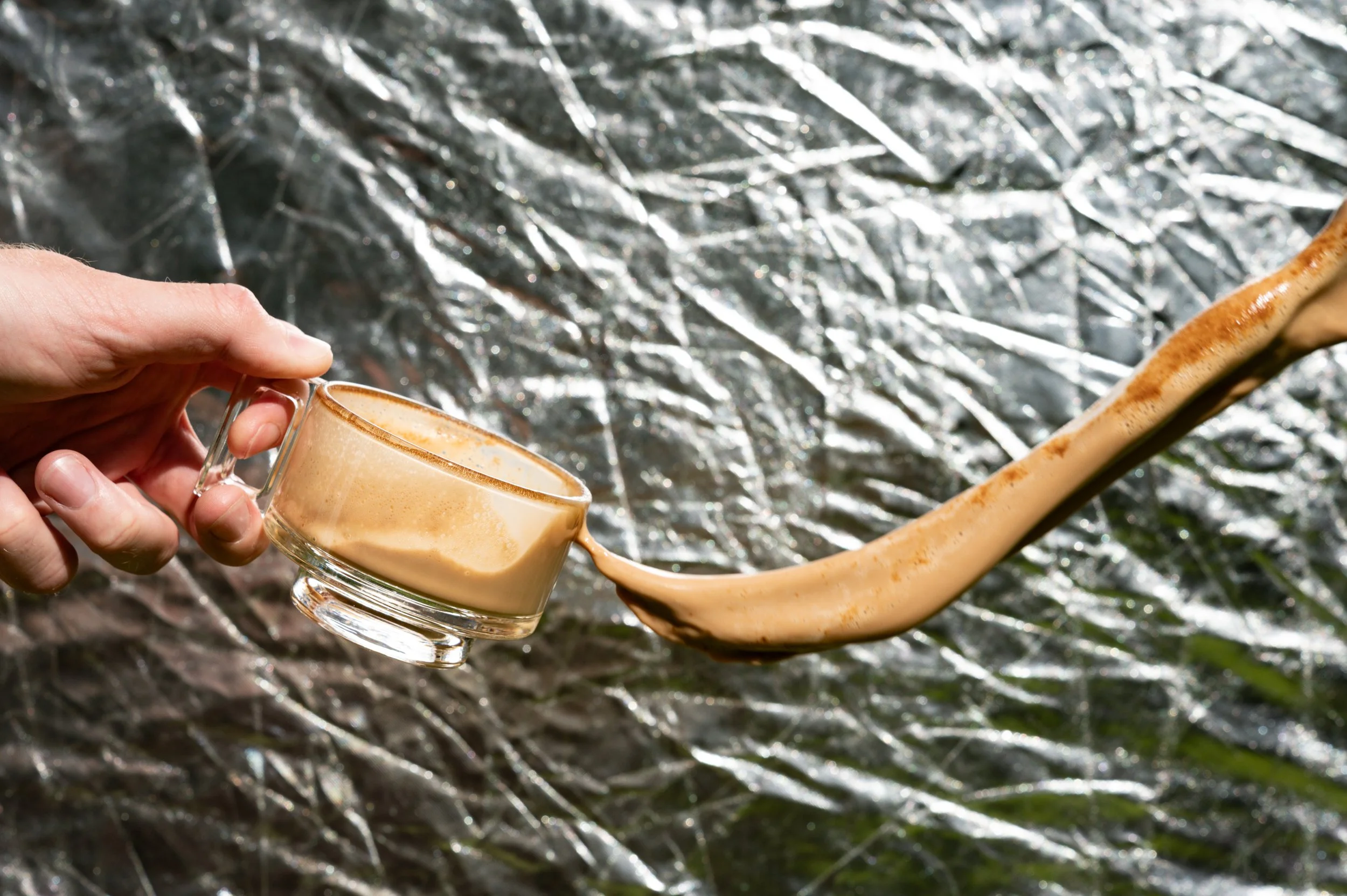

Securing a real set requires attention to detail, as replicas are floating around out there. When inspecting any piece of Arno glassware there are a few tell-tale signs of an original that the fakes usually miss:
Look for JC’s tiny initials moulded into the centre of the underside of the cup’s centre, along with “I T A L Y” alongside it around the circular centre base.
All Arno cups were manufactured by sticking two half cup moulds together down the mirror line, so look for a pronounced seam running the length of the cup. This manufacturing process is outmoded today, so chances are a replica won’t go to the effort of replicating this manufacturing scar.
Arnos were made quickly and cheaply, and whilst this doesn’t detract from the design, their style of manufacturing is reflected in the finishing quality. Look for sharp edges, especially on the top of the handle which is one of the few sharp angles on the cups. These idiosyncrasies are the sign of a real vintage Arno.
Arnos are thick and heavy, whilst most replicas are made with thinner and cheaper glass, much more easily broken.
Sometimes the most beautiful things are the simplest, and the simplest things like switching up your coffee cup can be the most enriching. It’s just another small way to glean enjoyment out of the everyday parts of life, just like that crunchy, juicy apple.
You may also like
-
![]()
Time With: Billy Zammit + Tahmyna Rad
“I really feel the way I live my life is like a research project.”
-
![]()
An Oasis In The Heart Of The City: The Barbican Conservatory
Tropical Brutalism never looked so magical.
-
![]()
Coveted Object: Omega Constellation Manhattan
While all Omega Constellations are created equally, some are more equal than others.
-
![]()
Going Big, Bold and Bright with the Doxa Sub 300T Divingstar
Unapologetic in its purpose, the Doxa Sub 300T brings an authenticity rarely seen from other watches.
-
![]()
The Rolex Oyster Perpetual Pistachio could be the perfect everyday watch
This green doesn’t shout, it whispers.
-
![]()
A House Amongst The Trees: The Lobster Bay House
A beautiful reminder of the magic that great architecture has.
-
![]()
Scorpio By Name & Nature: The Abarth 695 Competizione
A jellybean-shaped muscle car that oozes charisma.
-
![]()
Getting Stoned with the Dennison A.L.D
Dennison is here to democratise stone dials, and we’re all for it.