Time With
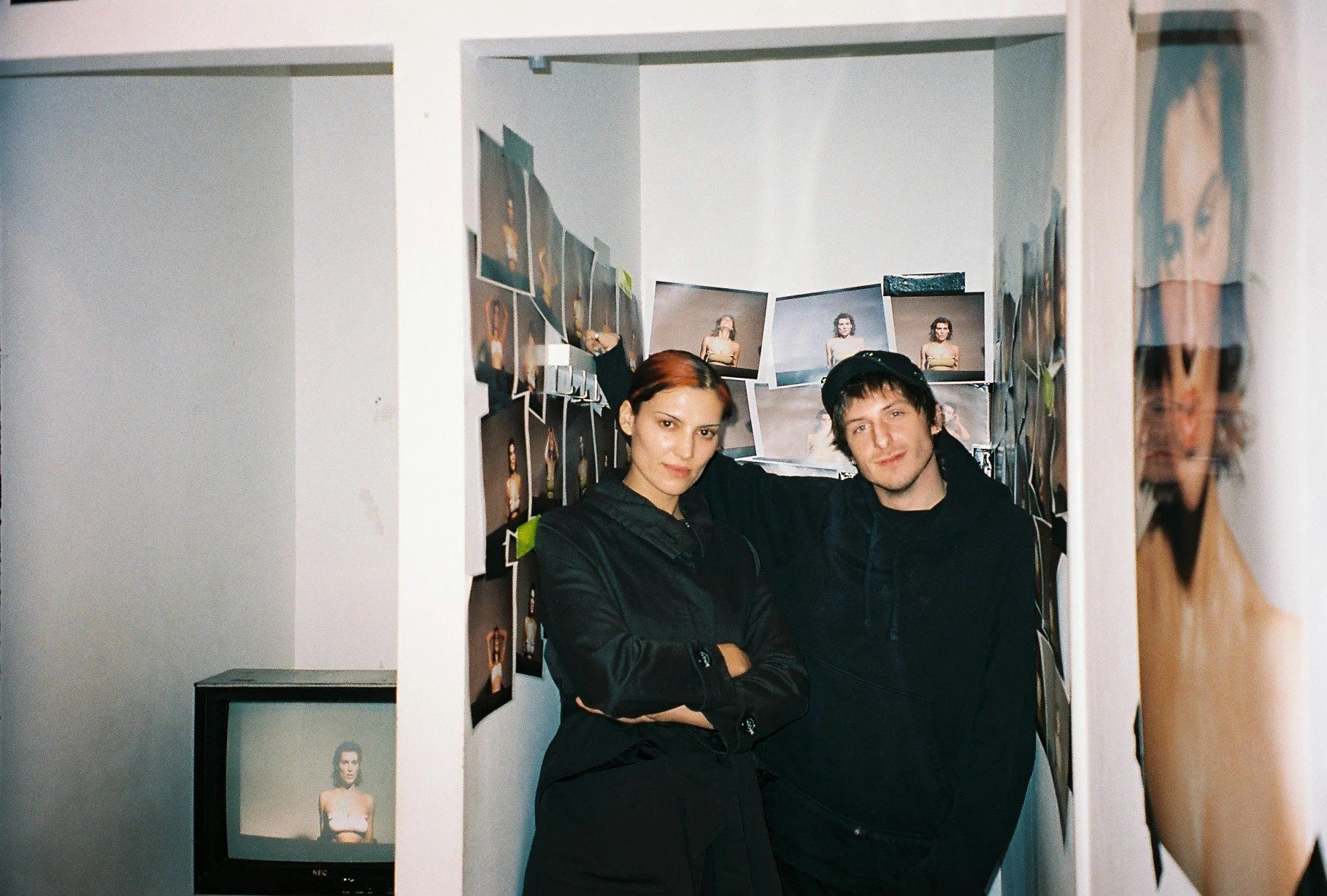
Billy Zammit + Tahmyna Rad
Words + Photos: Georgia Griffiths
Time With begins one question: How would you describe your relationship with time? An exploration of how we each relate to one of life’s inescapable forces, this series dives into how interesting people use, capture, and think about time.
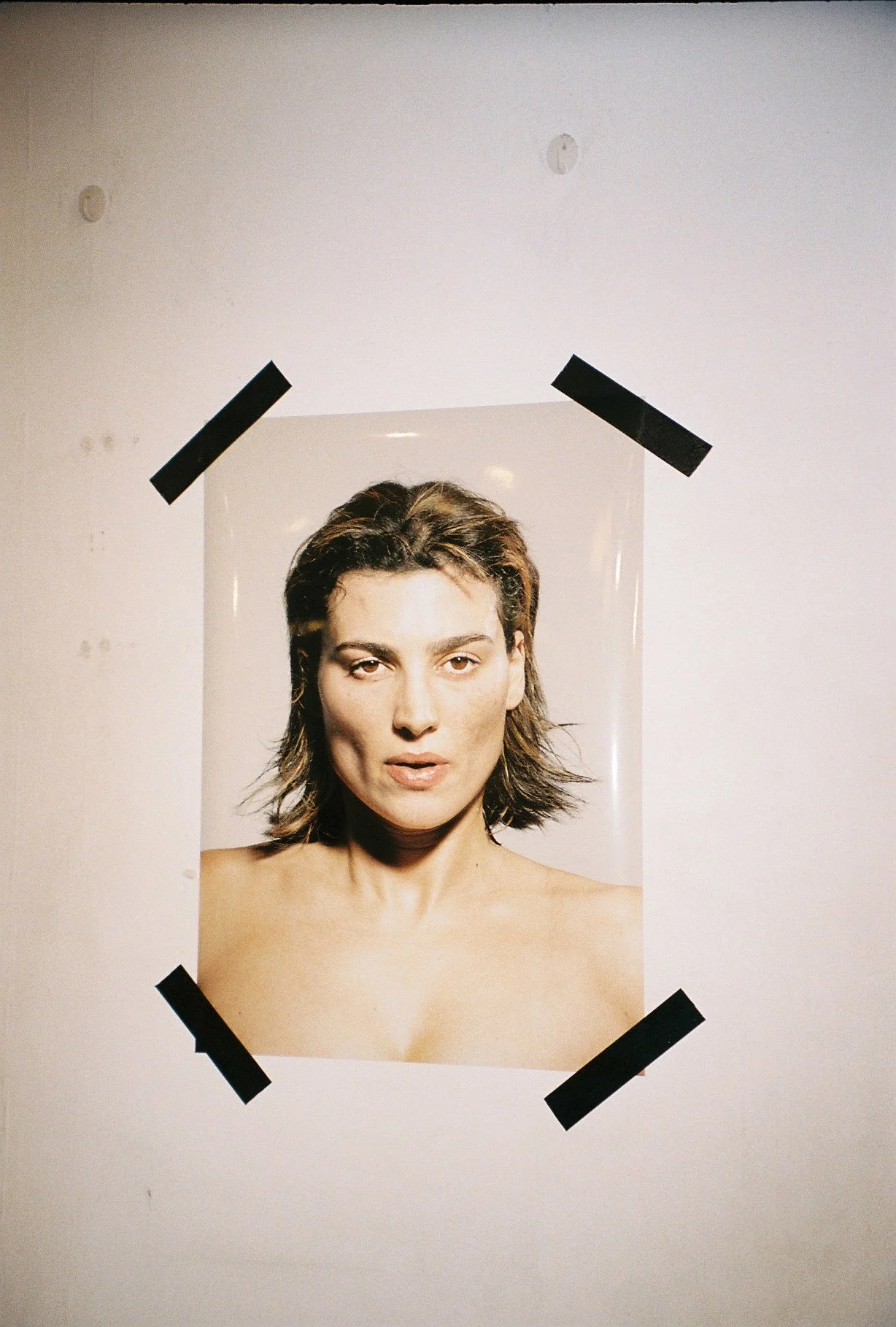
To kick us off: Sydney creatives Billy Zammit and Tahmyna Rad discuss their recent collaborative project ‘Evolving Motion’, a visceral work about movement, exertion, and impermanence. ‘Evolving Motion’ is Rad’s first physical presentation of personal work, in which the duo invert the traditional ‘muse-photographer’ relationship. Rad plays the role of both muse and author, while Zammit acts as interpreter and documenter. The project was captured over the course of an hour, as Rad completed high-intensity interval workouts, with thirty seconds between movements for Zammit to capture the highest point of exertion.
Brought together through the DIY music scene, in this conversation the pair reflect on their shared love for movement and collaboration, and how experiences of time shift with context.
How would you describe your relationship with time?
Tahmyna Rad: As an artist who has changed from working a very traditional job in the past as a lawyer, moving into the arts has totally flipped my perception of time. When you're working a traditional job, you're grounded to society. Monday, Tuesday, Wednesday, Thursday, Friday, every day there is something that ties you to it. When you're a freelancer or an artist, your weeks don't work in seven days or five days; they're really sporadic. I feel like my relationship to time has really changed since I've flipped my career and pivoted into a new world. It feels like living in an alternate reality in some ways.
Billy Zammit: Fleeting? I think that time is fleeting and subjective. I'm not trying to use it as a parameter of what I'm able to accomplish and do; it’s not something that dictates what I do and where I can do things. I have such an understanding of burn bright, burn fast, but without burning the candle at both ends. There's also an enjoyment in perceiving it and watching it pass. We shot this project almost a year and a half ago. Being able to reflect upon it when looking at this and being like, “Oh, this was 18 months ago. We've done so much in that time.” I wouldn't have thought about it that way when it was happening.
Time is so intrinsically linked to the ‘Evolving Motion’ project; it's such a crucial third party. When you were concepting and setting this up, was it something that you were aware of?
TR: Billy and I wanted to create something together that represented a relationship of respect. We've met through underground culture, rave culture and music, and movement is such a big part of that. Time doesn't really feel like it exists in those spaces. We’re translating it into something that both reflects Billy's background as a photographer, but also my background as a model, without pushing the traditional tropes. We’re inverting it, where I'm directing Billy in a way, and he's bringing it to life. We used time as the basis of this concept, because it was over an hour period where I worked out, and every five minutes, we took a break of two minutes to shoot. Without documenting time in this piece, it wouldn't make any sense at all. It's a chronological display of how the body changes and evolves over time, particularly showing what exertion looks like.
BZ: We had a conversation forever ago that stuck with me when we were planning this. You can only really look like this if you've done it and exerted the energy. You can't fake this kind of exertion. Speaking to our rave underground background - at the end of the night, the lights go on. Everybody looks like trash, because you were doing it. If you see someone at the end of the night and they look immaculate, it's like “You didn't do the thing”.
Were you aware of time when you during the shoot?
BZ: I had different values for time in the shoot. We had a finite window to capture this, with Tahmyna’s level of exertion. We had to shoot without losing momentum. It actually came to a close pretty quickly; when we got to the end moment where I had to leave for another committment I was surprised. With hindsight, looking back at it, the actual shooting component after the workout would have been like five or 10 seconds. The momentum carried through and Tahmyna didn’t need the direction from me to do the things towards the end of the shoot, because we'd gotten into the flow state of it.
TR: I think the relationship to time changed over the period of the shoot as well. At the start of it, doing a five-minute workout, it's not too hard, but once you get to the end, you're trying to capture what exercises I did, take photos, think about the next thing, get upstairs, make sure it's five minutes. Your relationship to time when you're in that state of manic movement and exertion really is a different experience compared to when you're in a calm state.
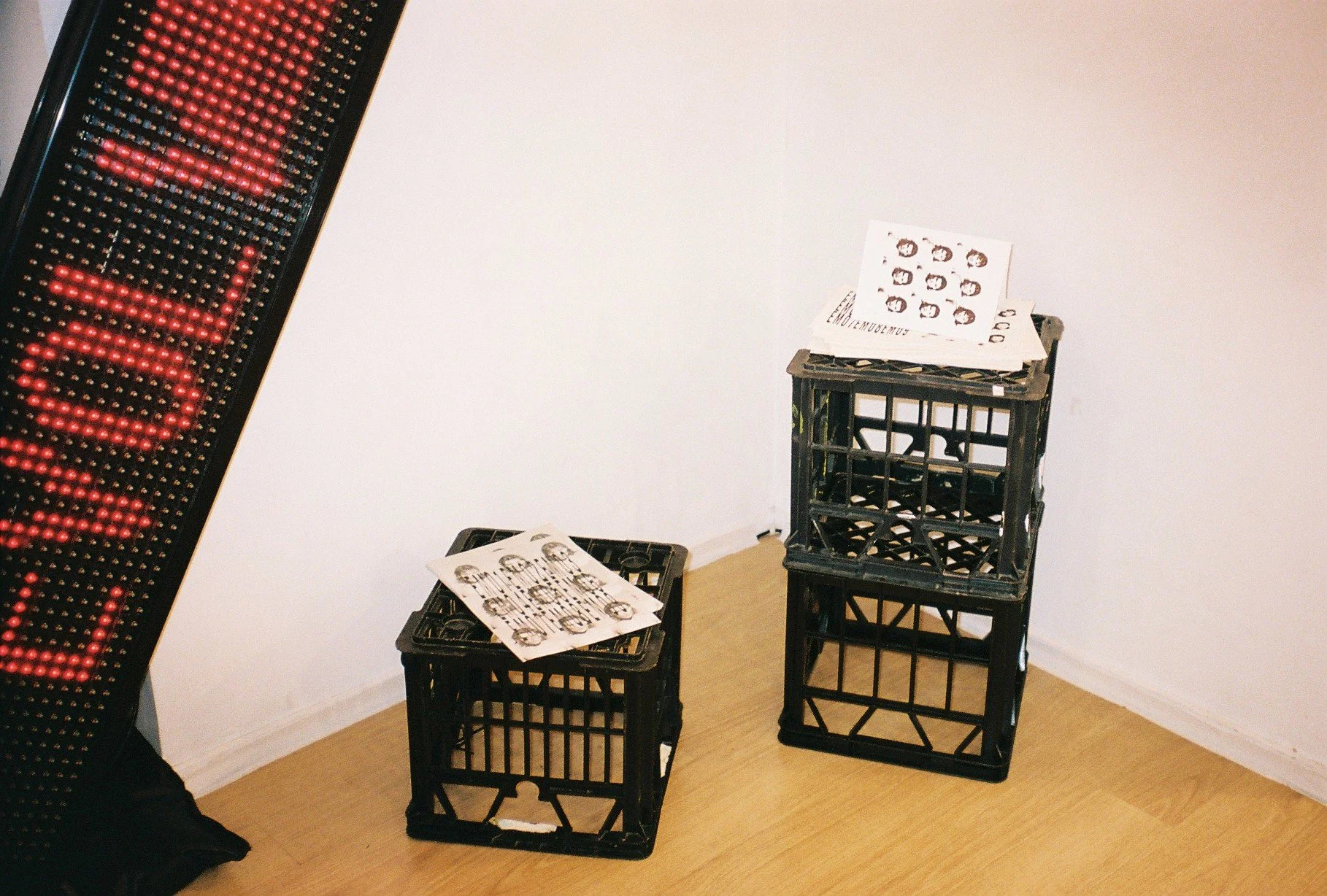
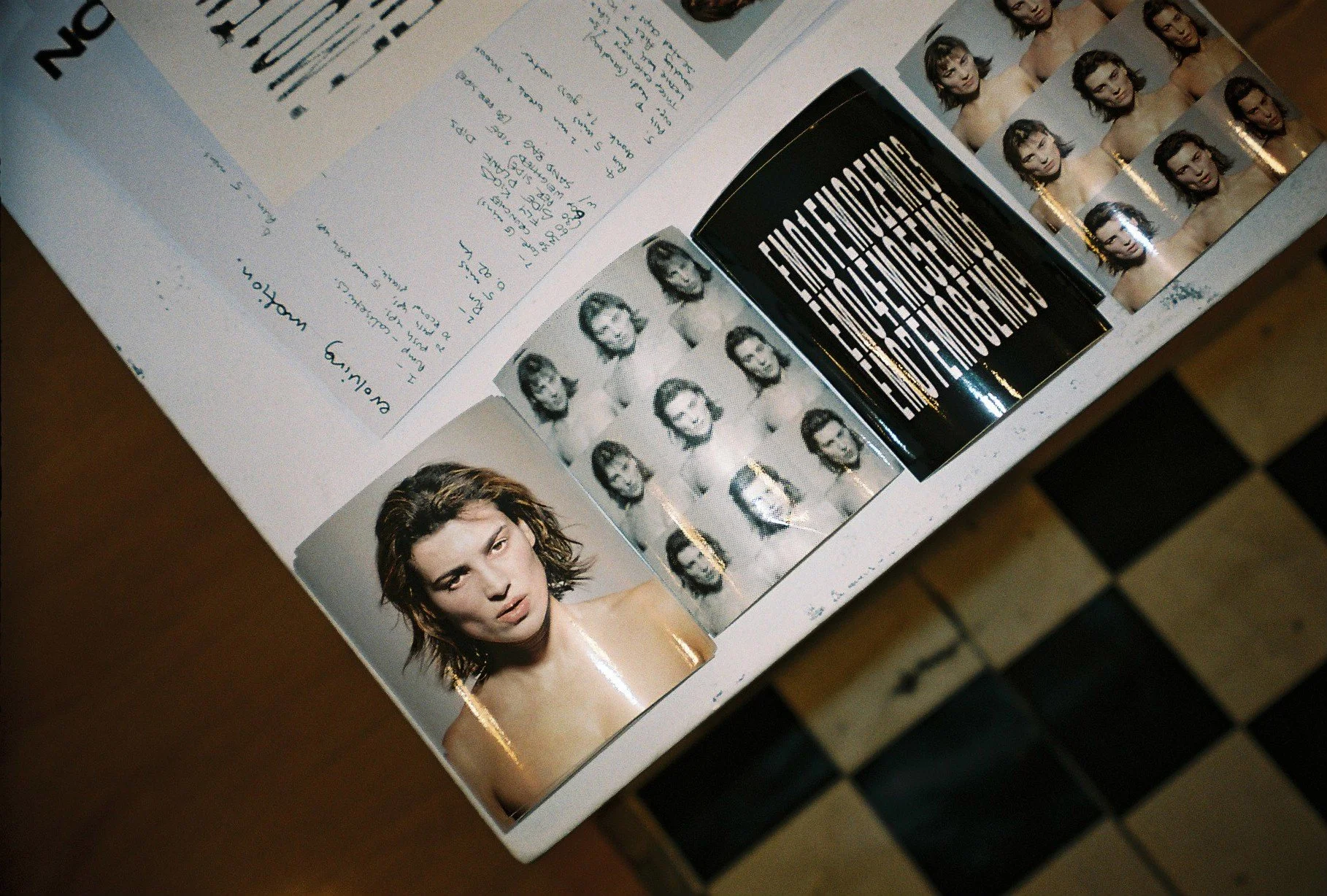
This pop-up exhibition you're doing is here for a day, basically last night and then today, and then afterwards, you're going to have the posters up saying “Oh, you missed it, you can watch a video”. But that's not the same experience as coming down to this, seeing everything in situ. How did you decide that this exhibition space would also have that ephemeral moment?
TR: We created this, and we had the vision that we wanted to be an exhibition. I think this is something worth seeing, and it's so different to putting something online, where it might be seen or it might not be. Deciding to bring this to life was us just saying, “Let's just send it”. Finding this space was just walking past and looking, and thinking, “Okay, I want that. I'm going to find a way to get it”.
BZ: We really wanted it to be something that people who wanted to see it will get to see it, and people who are there will experience it, and people who don't will regret not seeing it. It’s such a reflection of the pace which we live our day-to-day existence these days. The thought of this lingering kind of leans into complacency for me, which is the enemy.
Talking more broadly, Billy, you strike me as someone who is always thinking about what's next. Is that something you identify with in your day-to-day life?
BZ: Over the twelve years of me doing this, I've found a way to be present and at pace. There used to be a choice as to which one of those it was. I'm happy that this exhibition is up and gone, like an exploded firework. That's exciting. Even with the capture of this project, it was exciting for me to get a fleeting moment to capture the expression of the workout.
The pressure was reminiscent of my graffiti upbringing, capturing things while they’re happening. With graffiti, they're either gonna get caught, or it's done. It's a documentation thing. I'm not counting down the seconds. I'm like, “Finish it. Finish it. Finish it. Get it done. We’ve got to go.” As opposed to saying “I've got three minutes left”. You can only do that if you have more time than the time it will take to check how much is left. It’s going in front of me, it's leaving me as I'm doing it.
And Tahmyna, coming from a corporate workplace previously, you're a bit newer to this kind of world compared to Billy. Are you still finding that you’re thinking go, go, go?
TR: I really feel the way I live my life is like a research project. I don't think it's me trying to prove myself, or like me trying to chase something or pull between two choices. What is it that I want to do, and how can I bring that to life? How can I live my most authentic self, but also make it work in this economy? Even outside of being an artist, just for myself. We're spending our own money on this, no one is supporting this. All we want is for people to experience it and see what it is that we see. I feel like there's so much opportunity to give the world the knowledge that you have from all the experiences you've had. I don't think about time or pace tied to that.
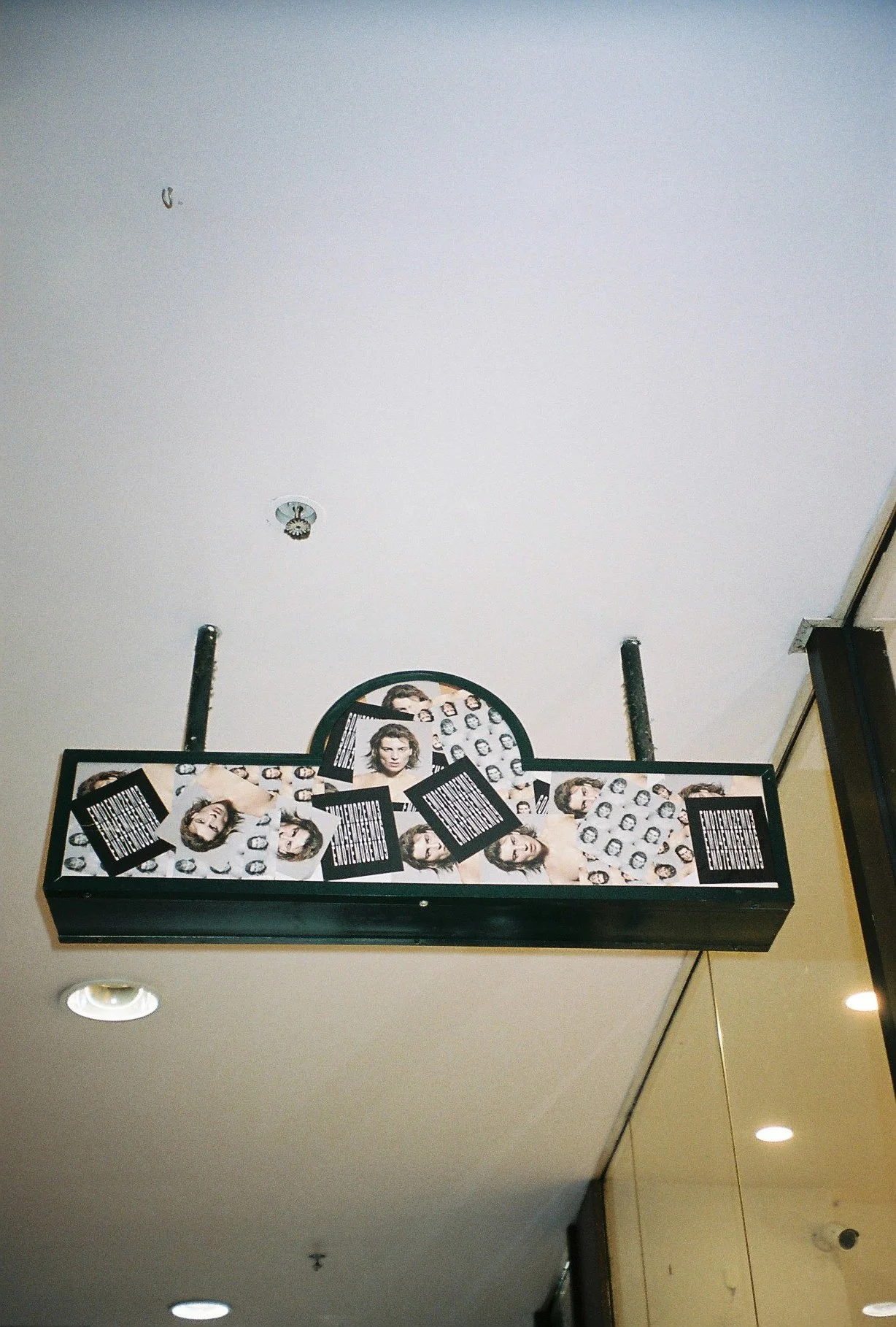
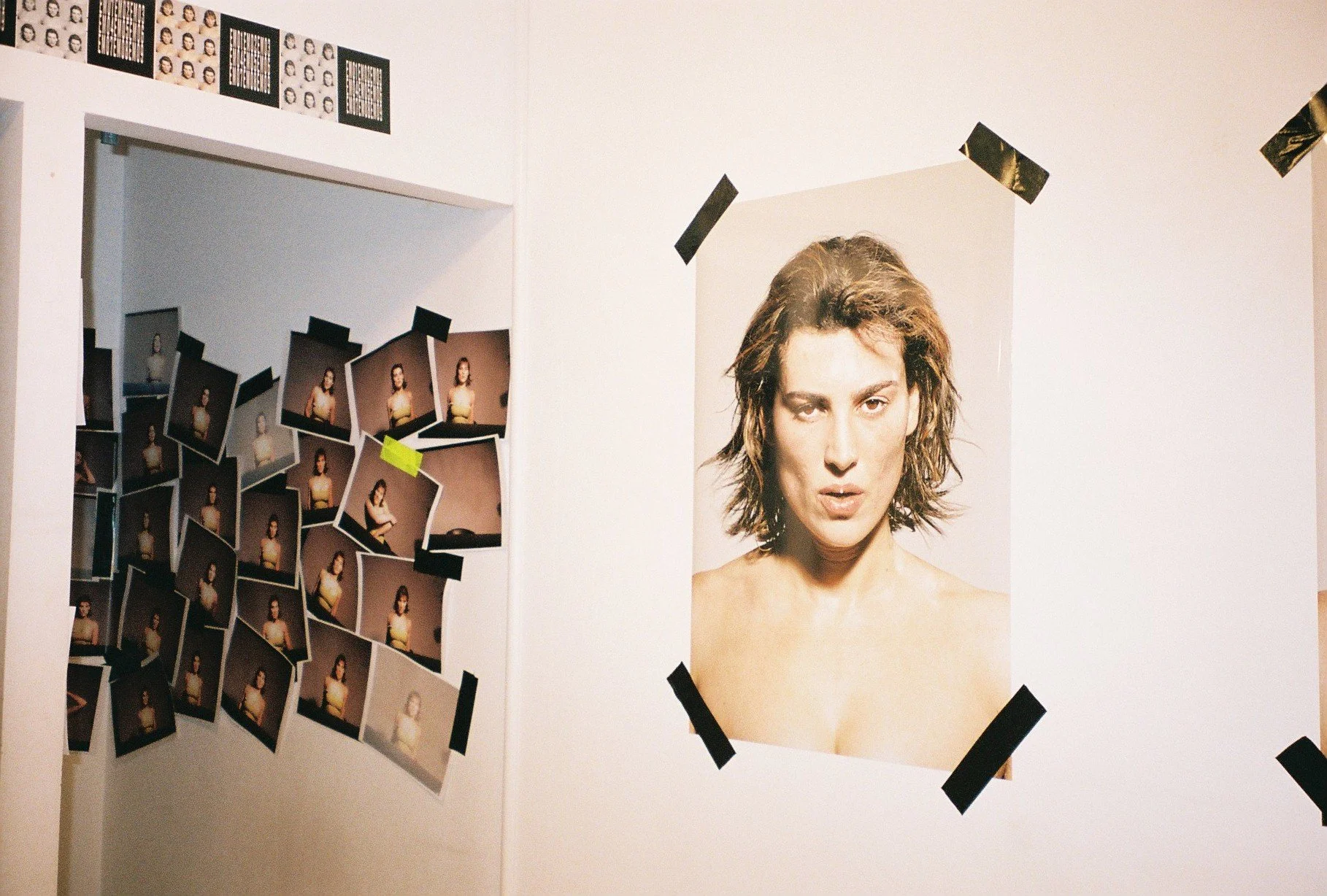
You touched on community there. You're funding this yourself, you're doing the screen printing. When you're approaching a project like this, how do you think about including your community or getting help from the community? Is that something that you're actively thinking about, or is it more just in the natural flow of life?
BZ: There's no question of exchange. We're really fortunate in having a circle that’s fostered a productive environment, a shared pool of gifts and talents and experience and appreciation. Within the subculture, there’s a mutual appreciation for helping and wanting to support everybody all the time.
Do you think it's nature or nurture? Do you think it's something you were born with, or do you think it's something that you've learned over time?
TR: You meet people who have very little community-mindedness. If you don't have people who you genuinely can lean on and can exchange opportunities with and help one another, then you don't know what it means to have a community. You don't know the value that it holds to help each other for the sake of it, because you want to see each other thrive, and you also know that by helping each other, you're both going to bring your own work to life. I think that's also the core of being a creative and what actually makes it such an enjoyable experience. You get to meet so many wonderful people who are just creating things because they have a passion for it. You share that common ground.
I worked in corporate for many years, and I met some really wonderful people. I think the challenge for people working those spaces isn't that they don't want community. It's that it's really hard to foster community in spaces where there's a box that you're expected to fit into, and where the work that you do is client-billed, and you're all working on the same thing, rather than sharing skills across your own individual work. When you're a freelancer, you have something to offer that's unique to anyone around you, but you also have friendships with a lot of other people who are doing different things in similar ways. Building relationships creates this community where you have a shared vision to create something, and that just perpetuates the more that you create.
BZ: You've got to have a general draw to collaboration as well. We had a friend of ours helping me install the exhibition. We worked on a project a couple of weeks ago, and he just reached out and wanted to come through. It was a real natural, calm inclusion. This person's hungry. They want to do this thing. They match our energy. They're at our speed. They were here all day. No drama.
My perspective on community is that it's fostered within my own world, it’s a product of my environment, I've collected all of my one-of-one people. I am aware of the concept of you having work friends and not work friends, but I’ve never had that. We're all just doing the thing. It's collaborative. It would be different if I were doing something that I didn't enjoy, if it were manual labor and we're all working together, it would be different. We did this for us, there are no dollars on the back of that print for sale. There's nothing. There's no merch. There's no “here's a thing to come and buy”. It's come and experience the way that we were in it. Here's the person that did it.
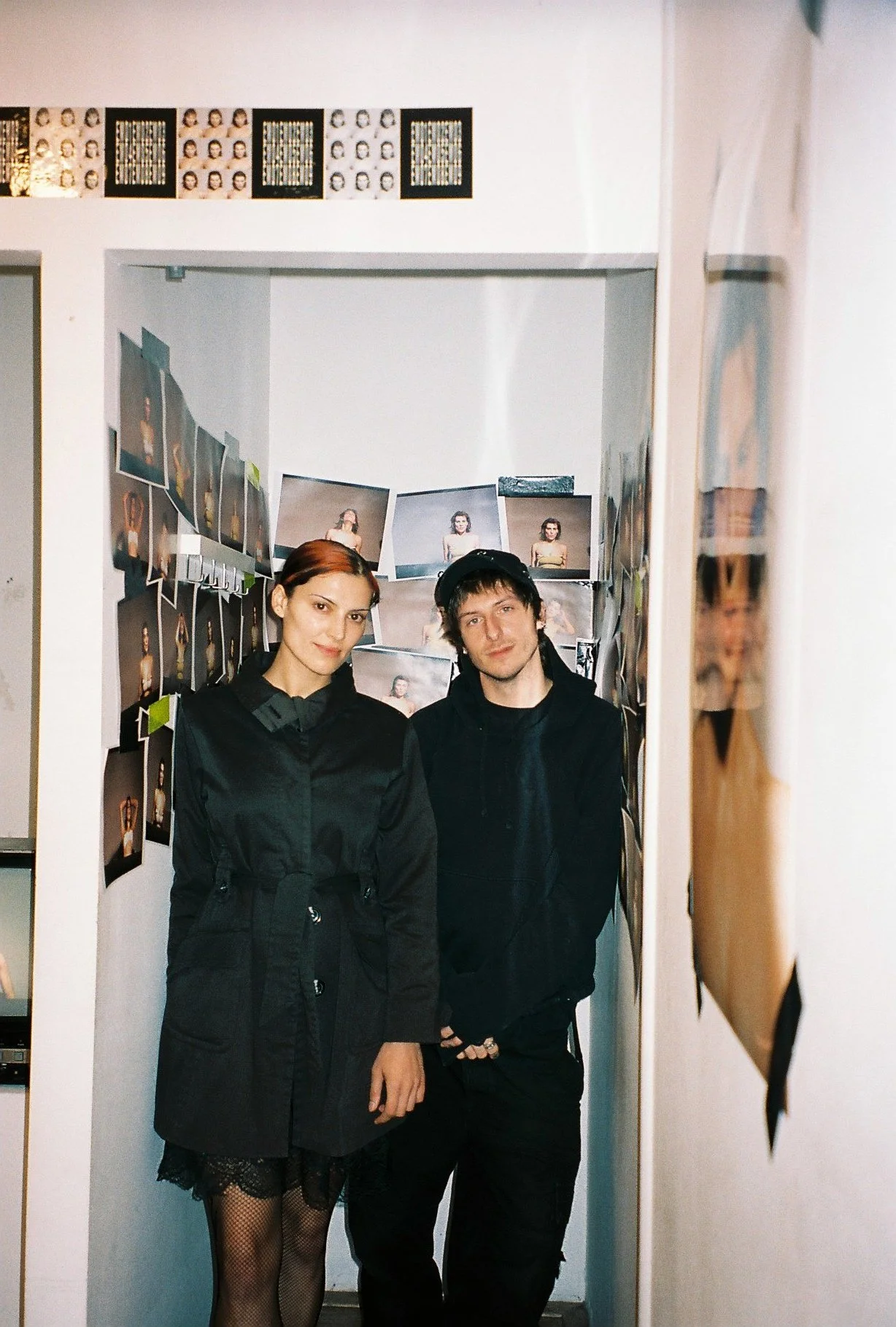
What do you see the legacy of this work being for both of you?
TR: I think living on in the memory of everyone who's experienced it in the flesh is a really important element of the actual exhibition itself. When you create works, a lot of the time it's getting posted online and it's gone once you refresh the page. Experiencing it in the flesh and taking in every image, considering the concept, viewing the video, experiencing every part of it, and then being in community with other people who are experiencing it at the same time. It's people coming into our minds, our world, and getting to live in there briefly, and then understanding us better in a way as well. I feel like the extension of this is people knowing more about who we are, as well as more about how they can see the world, because they've just seen it through another lens.
BZ: There's a trust in allowing people into this vision too. The subject matter is something that isn't usually captured, and we've shot it under the most unflattering beauty standard lighting.
The conversation around memory and “did you get to see this?” reminds me of how we are with shows and being in venues, going and supporting our friends. It's like, “yo, I was at that thing”.
We've got fifty posters over fifteen locations going up throughout Sydney that are triptych A0 prints of the exhibition excerpts. But that's another experience, to be able to go and see it a different way. The images that we're having up with the street posters are double the size of what's at the exhibition. If you weren't able to get to here, you can at least go to them. We’re having them live on until they're no longer there, which we don't have control over. They're either gonna be pasted over because of the timeline from the company puts them up, or they'll be caught in the weather and they’ll fall apart.
How do you think this project might have changed or not changed your relationship with time? Do you consider things differently after doing this?
TR: We shot this quite some time ago, and we had a vision to run an exhibition, but we hadn't put any solid steps into place to actually lock it in. A few weeks ago, I said to Billy I really wanted to get this done before my birthday, which is tomorrow. Billy was like, “Yeah, we can do it. Let's just lock a place in and we'll just do it.” I was like, “Okay, we're on.” So within a period of less than three weeks, we found a location, we got all the images printed. We chose the selects a year and a half ago.
BZ: Yeah, that's crazy, right? They're sitting on a hard drive, let's find them. After a long time we got into them, and we're like, “Oh, here they are, great, let's go”.
TR: It was 3am, and we were like “we're gonna do this”.
BZ: When you asked if we could do it, we weren't sitting on it for any reason. We would pause on actualising it into a space where we could do it because of our scheduling. They weren't real issues though, it was a constructed thing. I was away, Tahmyna was away. We couldn't do this, I was working on that. We want to put it up ASAP.
When we went and found this location, we were talking about a timeline for it, and we kind of just naturally came to “why don't we just do it for a weekend”? We just do it for 24 hours, and then that’s that.
TR: It didn't tie us to any expectation of what it means to have an exhibition, or what other people wanted.
View the ‘Evolving Motion’ catalogue here
Follow Billy Zammit and Tahmyna Rad
You may also like
-
![]()
A House Amongst The Trees: The Lobster Bay House
A beautiful reminder of the magic that great architecture has.
-
![]()
Coveted Object: Arno Coffee Cups
“If you’re going to have an apple, make sure it’s the crunchiest, juiciest apple you can find.”
-
![]()
Coveted Object: Omega Constellation Manhattan
While all Omega Constellations are created equally, some are more equal than others.
-
![]()
Scorpio By Name & Nature: The Abarth 695 Competizione
A jellybean-shaped muscle car that oozes charisma.
-
![]()
Going Big, Bold and Bright with the Doxa Sub 300T Divingstar
Unapologetic in its purpose, the Doxa Sub 300T brings an authenticity rarely seen from other watches.
-
![]()
The Rolex Oyster Perpetual Pistachio could be the perfect everyday watch
This green doesn’t shout, it whispers.
-
![]()
Getting Stoned with the Dennison A.L.D
Dennison is here to democratise stone dials, and we’re all for it.