Time With
Maggie Zhou
Words + Photos: Georgia Griffiths
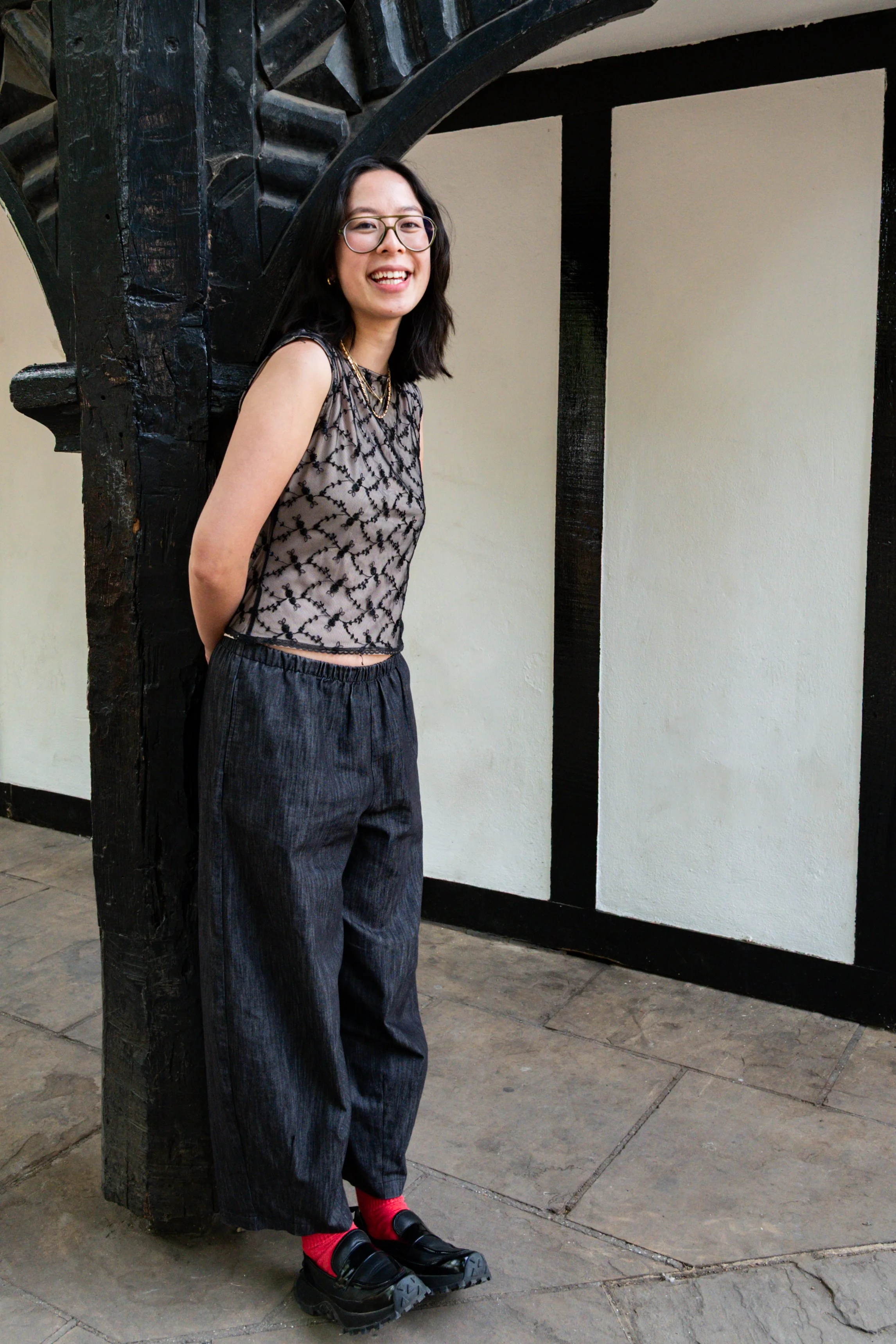
It’s a Sunday morning in the middle of summer when Maggie Zhou and I meet for coffee. The streets of Soho are mostly empty, as it’s before midday, which in London feels like it may as well be the middle of the night. Our café of choice opens its doors a touch after 10am, something that feels inconceivable to two Australians. Maggie orders a coffee, and I order a hot chocolate, as we sit in the courtyard to chat.
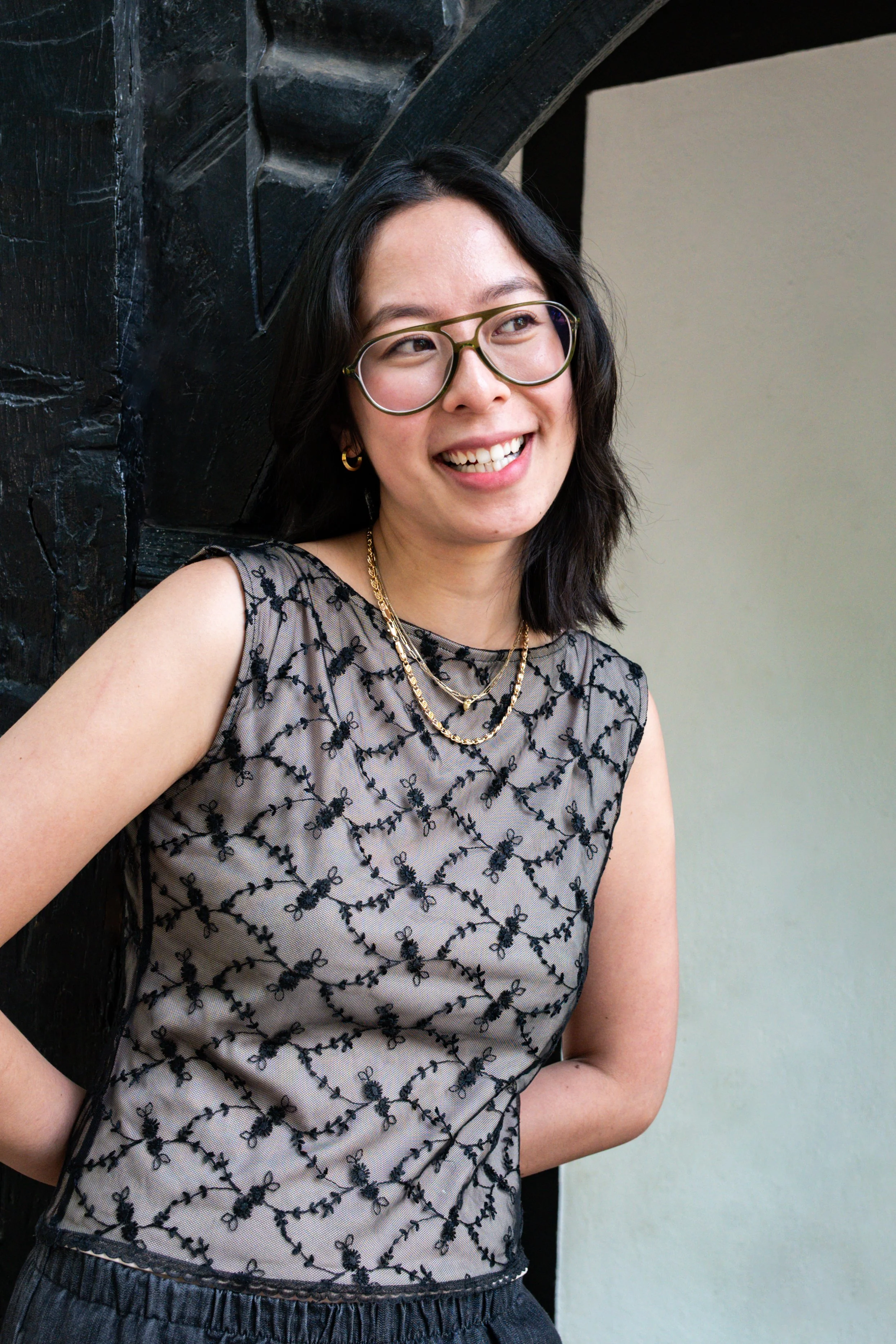
Maggie is a writer, podcaster, content creator, and fashion sustainability advocate based in Melbourne. She’s been online since she was a teenager, and now has a platform where she discusses fashion, lifestyle and social issues with her audience of over 50,000 followers. She’s currently Broadsheet Melbourne’s fashion editor-at-large, and has written for The Guardian, The Age, ELLE, Fashion Journal and Refinery29. We sat down to discuss her approach to career planning, the trade-offs that come with sticking to your values, and what being online means in the current day.
How would you describe your relationship with time?
Maggie Zhou: Not to sound like a John Green quote, but I love, and I really do value, living in the present. I never think about the past or the future, beyond dinner. Maybe tomorrow night. Perhaps it's a bit fear-driven sometimes, but the idea of a five-year plan feels like a jinx to me, so it's not something I ever think about.
I think I'm someone who really values how I feel in the moment. I'm someone who prioritises leisure and pleasure. That's why I focus so much on the present, because that's how you experience it.
Do you think there's something you can pinpoint that's made you this way?
I think, for as long as I can remember, I've always been someone that's enamoured by awe and the small things in life. It can sound very cheesy, but it is about the way that the light filters through certain trees and witnessing a sweet encounter between strangers. These things fill my cup the most. But there wasn't any moment. I know that my youngest sister is similar as well. Perhaps it was how we were brought up?
Maybe it’s genetic. I think it is so different for every single person. I feel like I'm very much a forward planner. I'm always thinking about what's next, what's next, what’s next. Sometimes to my detriment, right? I think that that's a result of several things, I can pinpoint reasons why, when I was growing up, that I became that way. But maybe I was just like that from the start.
You know what, though? To contradict myself a little bit, I am very type A and I'm quite anxious as well. But for some reason, I think I'm very much action-driven, so I'll try to do something instantly to fix something, but I don't like thinking about the future too much.
It sounds like a good attribute. We were talking about getting off our phones and all that kind of stuff earlier. Living in the present is a solid attribute to have, particularly right now, I think. Do you find that it’s the same when you're thinking about your career? Are you more forward planning, or are you just going with the flow?
Genuinely yesterday, I was saying I need to start thinking forward like that. Some people will ask a very normal basic question such as “Whose career do you look up to?” and I go, “Oh, I haven't thought about that”. Which feels so silly, because I would say I'm someone who’s ambitious, but not necessarily about my career or business. I always want to do work that I'm proud of. But I think the job title or the accolade associated with that, it's very blurry when I think about that stuff.
With that in mind, how have you navigated your career to this point? Are you making decisions as they come into your inbox?
I don't have this big plan. I think I follow my nose, see what comes my way, and if it feels right for me in the moment, it's something I will do. I've worked in quite a few different media organisations since finishing uni, and at the time, each place has felt like the right place to be.
I was thinking about this quote again recently, which is “how you spend your days is how you spend your life”. I do believe in that. It's very privileged, because I don't have dependents and I'm very much my own person at the moment, and I love how I fill my days. Sometimes I think, is that not enough? I think also earlier on my career, I was in what I considered at the time my dream job, and I was getting these other jobs coming my way. And I thought “This is exactly what I want.” But I'd feel very proud and accomplished for 2 minutes, and then I'd be like, “Oh, that's it.”
What I value is human connection, and life experiences, and that's what really fills my cup. I stay with that feeling of fulfilment when it comes to those things, but with career things, it's a brief experience.
I think it's very much a feeling that a lot of people end up experiencing. You get the dream job and then you go, “Oh, wait, why don't I feel happy?”. I have friends who've said “Oh, I thought I wanted this, but maybe it was my parents' dream, or maybe it was a dream that social media sold me.” They feel unfulfilled in that way.
Especially in media when there are so many glitzy and glamorous job titles. Being in the industry, and I say this in the nicest way possible, you meet these big editors, and you realise they're just people - they're so normal, and they're also going through it as well. I don't know if I want to over-romanticise that.
Your career has been very value-driven. You’re very vocal about sustainable fashion. Do you find that having that set of values is useful in building what you want to be doing, or do you feel like you're constantly fighting with people? How do you think it’s shaped your career?
I think being value-driven, especially when it comes to the fashion side of things, has very much narrowed my career, but also narrowed my vision, which I actually think is a good thing. It’s also a limiting thing - I occasionally think “Wow, imagine if I didn't have values, and I was partnering with all these fast fashion brands.” How soulless that might feel, but also how much money I’d have.
But I think it's been nice to have somewhat of a guiding light, because social media is, of course, so noisy, so saturated. I'm someone who is interested in so many different things. My content covers societal issues, fashion, lifestyle, and city guides - a lot of things! Having my values underpin all of that has allowed me to carry myself on social media in the way I would like to be. I don't want to use the word ‘authentic’, but it's quite genuine to who I am.
You do meet people who are big on socials, and in person their actions don’t match the persona they portray online. I think it can be a distinguishing factor if you align with what your true values are. Even if it can be a limiting factor in other ways.
It's interesting. I hadn't thought about it that way, because I do think I'm quite similar to who I am in real life online, but I don't put that on a pedestal anymore. I don't find it the biggest compliment if someone says I’m exactly the same as online, because I want to keep something to myself. I want to be my own person. I do think my values in person and online are pretty much the same, and I'm prouder of that.
You’ve been online in the public eye for quite a long time, fourteen years or so. How do you think your relationship has changed with the online world in that time?
The other day back in Melbourne, someone came up to me, which was very lovely. She was like, “I’ve followed you since you were 14”, and the wording of it felt so funny. But fair game - I have been online for a long time!
Before Instagram I was on One Direction Twitter and on Tumblr a lot, and it was so formative to who I am, and I'm so grateful for it. It led to the person I am today, in terms of identity, social issues, finding community online, and finding that shared knowledge and language. It was a place to escape to, I would say.
Now, a decade and a half later, I feel there's more of this tension. It's a big part of my life, but I'm trying to find ways of differentiating myself from the online space, because it's been something that's been so tied to me. I would say posting on social media is second nature to me - I can only really speak English, but it's like my second language. And I'm starting to question that in some ways.
You hear all these people, influencers, in online spaces complaining about social media, the thing that built them up – but I do actually really like it. I love creating content, I think that's why I do it. But I am having conversations with myself questioning it. We all know that it can make you feel really shitty, and it can be such a time suck as well. I'm trying to figure out a new chapter where I would like to live alongside it still, but perhaps have it be less of a part of my daily life.
Do you think that’s influenced more by you getting older and your priorities changing, or from the technology itself changing?
I would say it's more of the latter. I think social media platforms have changed so much. I really like tech culture journalist Cory Doctorow - he came up with the term “enshittification”, which is essentially the theory that everything, especially the tech world, is just getting worse and worse. I think that's undeniable. Everything from AI slop to the hyper-commercialisation of these platforms, to how much content there is, makes your experience way less enjoyable. At the same time, these tech companies at large, we're seeing them being not very good guys. You can't separate the two.
It's funny you say that, because I think people forget that Facebook is an advertising company. These companies were not started for community, they were started to sell ads and make money, right? We projected onto them what we wanted from them. At one point it was a fair exchange, and I feel like the balance has shifted. You're not the first person to say to me recently that it's gotten more obvious how much they are extracting, and that we're getting very little in return. How do you see this shift affecting broader culture and society?
If I'm being honest, I don't think there'll be massive changes. There are definitely pockets of anti-establishment. We were talking before about your dumb phone that you've set up. On social media there are trends of crafting, tactile art, and “offline” lifestyles, although these are lifestyles that are shared online, right? These are great. I love seeing that, and I've participated in that, but I don't think they’re representative of the mainstream. You might have some relatives who are addicted to the games on their phone, or to posting on social media. It's just so embedded into our lives.
I'm curious about Gen Alpha, to see how they participate or don't participate in technology. Some of the young people in my life, they don't really care about social media as much as I did, or the internet as much as I did. But again, this is all anecdotal. In the UK and Australia, we've seen the social media bans for under-16s; perhaps that will change things. But in the next five or ten years, I'm not sure.
I was thinking the other day, the generation that we're a part of is a bridge generation. I grew up going on ABC Kids, playing little flash games. It was an easy jump to go onto MSN, MySpace, Facebook, Instagram. Now the people younger than us are going, “Oh, that's not really what I’m into.” There’s this core group of people who grew up on the internet, who are making careers on the internet. Maybe it's just going to be this little blip in history, of which we happen to be at the epicentre.
I think that could be at least some of it, particularly with the social media bans. Growing up at a time where you had a computer room, or you had one computer for the family, I had 45 minutes a week to play The Sims, which was a treat. I could only access it occasionally, and now when I have my phone in my hand 24/7, it still feels like a treat. Perhaps you're right - maybe it's just that our generation had limited access to it, so this feels like it's the biggest deal, but perhaps for generations after it won’t feel like that.
It's like if you don't let kids have lollies at all when they're little, when they grow up, as an adult they just buy all the lollies they want.
Exactly.
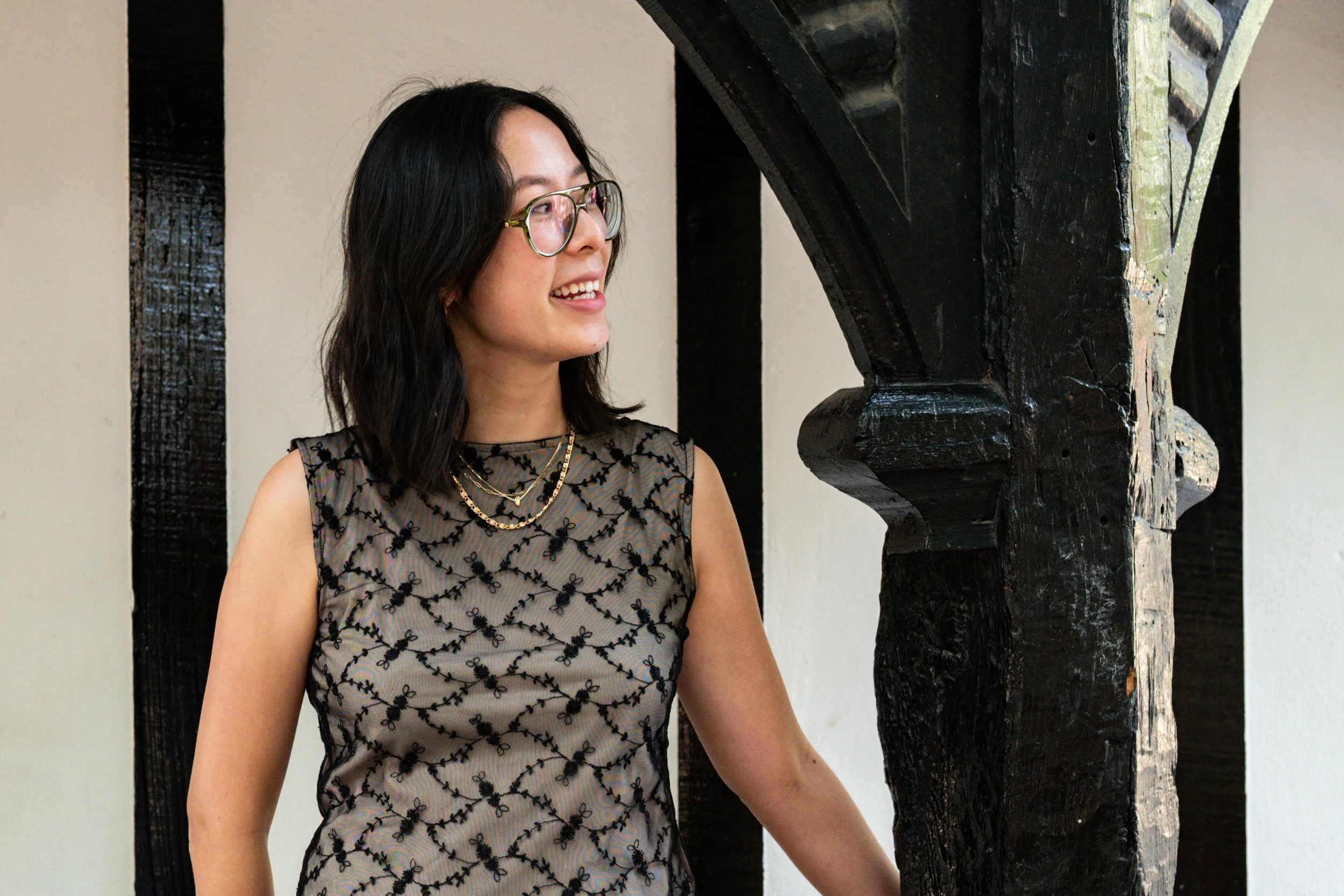
Something that I'm observing a lot in the fashion industry is that it's very self-referential. It's often looking towards the past. It's sometimes almost approaching snake-eating-tail territory. There are still people that are pushing the boundaries, but I think we're seeing the same stuff and same references repeatedly. Do you see this yourself? Do you think that's going to change?
The industry has always looked to the past to inform the present. I remember speaking to Shag, which is a Melbourne vintage store. They started in the 90s, and they said back then in the 90s, the biggest thing was 70s fashion. The generally accepted definition of ‘vintage’ is if it's been around for 20 years. I find that fascinating, that people in the 80s would be into clothing from the 60s. We look back at who we were to help understand who we are today. There’s something nice about that, because to me, despite all the changes that we see today, at our core we are the same people.
In terms of how fashion feels the same, though, I think you're totally right. From the early 2000s to now, fashion hasn't changed that much, and it’s to do with mass production. In the decades before that, there were so many changes in manufacturing and fabrics and things like that. I'm curious to see what fashion looks like in 20 years.
Not only has mass production changed things, but social media has. I can see what someone's wearing in Sydney from London, or I can see what someone's wearing in India from Japan. The globalisation of everything, on one hand, has introduced new fashion that I never would have seen before, but on the other hand, it’s flattened everything. People are going, “I don't want to look like someone from Sydney, I want to look like someone from London,” and we all start wearing whatever the hottest thing is in London.
Totally. I also feel like being in a place like London, where it attracts tourists from every corner of the world, there’s this broad spectrum of fashion. It’s been fascinating to watch, because in Australia everyone essentially dresses the same. Even if you're dressing alternatively, you're still wearing what every other alternative person is wearing. I think here the codes are so spread out, and that's been so refreshing to see.
I don't disagree. I think there is more of a variety here than there is in Australia for a number of reasons. Geographical isolation is certainly one of them. It’s a fact that I’ve heard you say a couple of times, that Australians on average buy 56 new items of clothing a year. It's interesting that despite that, the diversity in fashion is arguably less.
It's so funny, we’re buying so much, and we all look the same. It's an interesting reflection on the country.
Do you see the next couple of years optimistically? Do things feel good to you right now?
I would say I'm a very optimistic person, but I have somewhat of a defeatist attitude sometimes, when it comes to what's happening in the world.
If we were to talk more specifically about fashion, are you optimistic? Or are you feeling defeated, or even bored?
When it comes to the sustainable fashion conversation specifically, I feel like there's so much fatigue we are wading through from general consumers, to brands themselves. In some ways it feels like a losing battle. On a large scale, if you're looking at the fashion industry as a whole, it can be really depressing with the continual rise of ultra-fast fashion places like Shein and Temu.
I do think there's so much hope and joy in pockets of fashion though, and that is always uplifting. We see local makers, we see upcyclers. We see student designers pushing boundaries. That is always refreshing and will always be there. I have no doubt that there are pockets of fashion that are doing something incredible, beautiful, and perhaps better for the environment. At the end of the day, over-consumption is such a big part of all our lives now, and that's what's really demoralising when it comes to the fashion conversation. I want things to change, but I'm not sure if they will.
Do you have any thoughts on how people can change things?
France is a good example. The policy changes happening there, where they are banning ultra-fast fashion advertisements in their cities and introducing taxes on fast-fashion garments, I think this is a great step forward. It will be great to see that happen. Apart from that, I think it’s about everybody becoming more acquainted with their clothes. They need to be forming intimate relationships with their clothes, and caring about their clothes. At its core, it doesn't necessarily matter what you're buying and from where, it’s about how you treat and wear and cherish your clothing. That really would tackle a lot of the issues we're seeing in terms of over-consumption.
It's also a better human experience if you enjoy what you're wearing, and you have a relationship with it. You go, “I bought these pants in Paris, and it was this tiny little store, and I love them so much.” There's a story behind it.
How the fashion industry is operating at the moment with its countless, endless trends and ads coming at you in every direction, it doesn't feel good. People don't feel good about fashion. Surely what we would like to cultivate is a loving relationship that you have with your clothing where you feel good, and you coexist with your clothing?
It's hard - I get pulled into looking at trends all the time. It's so nice to get something new and that feeling when you want to wear it straight away. But I think fighting back on that, and really loving your clothes, is so important.
Although I think so many people don’t have an outward interest in fashion. Clothing is a bit of a necessity; it's not a joy. It's just, “Oh, that's a thing I have to do”. Particularly people who are working in an office where they must wear a business shirt and pants every day - there's not necessarily any joy in that. People are potentially not thinking much about that, in the same way that people eat microwave dinners because it's easy. It's a challenge to try and get those people to think about loving their clothes.
Yeah, you are right. Some people don't care that much about fashion, and that is fine. I think when we're talking about this concept of loving your clothes, and recognising how you feel in certain clothing, it doesn't have to be “I feel like I look amazing.” It could just be “I'm really comfortable right now” or “This allows me to move a certain way I like to move.”
Yeah, I think that is probably the key. You don't have to wear that Shein dress just because it’s $2. There's probably a nicer alternative that you'll feel better in, that will last more than a couple of wears. Are there any designers or brands currently that you're really interested in, particularly in terms of sustainability?
A brand I really look up to is Kowtow, which is a New Zealand-based label. They have 100% plastic free clothing, and everything is made from fair-trade cotton. When I say everything, most brands will say “This is 100% plastic free, but it doesn't include trimmings.” Threads, buttons, things like that. Kowtow means 100%, including those parts. It’s unbelievable. I would say they're quite an established brand, and it's incredible to see a brand grow without losing their values along the way. That’s a brand I love.
We have so many incredible emerging designers in Australia as well, who I really look up to. Paris Jade Burrows is a designer who recently showed at Australian Fashion Week, and they have very historically referential pieces that are full of life and whimsy and character. One of my favourite looks was one that looked a bit like a pirate; it's great to see creativity flourish in that way.
You may also like
-
![]()
When Two Worlds Collide: Our Favourite Fashion Collaboration Cars
Taking designs from the runway to the speedway.
-
![]()
How To Buy Your First Vintage Watch
Here are the tips I would give to anyone looking to jump into the exciting world of vintage watches.
-
![]()
A Visit To The Japanese Temple of Collector Cars
Concorso d’Eleganza Japan has well and truly earned its spot on the global car event calendar.
-
![]()
This Lotus Elise Is A Fully-Functional Mobile Coffee Shop
Cars and coffee collide in a new way at Café Elise.
-
![]()
Coveted Object: Omega Constellation Manhattan
While all Omega Constellations are created equally, some are more equal than others.
-
![]()
An Oasis In The Heart Of The City: The Barbican Conservatory
Tropical Brutalism never looked so magical.
-
![]()
The Beachcomber House Is A Modernist Utopia
A house for the price of two family cars? It’s more likely than you think.
-
![]()
Internet Time: When Swatch Invented A New System of Timekeeping
In 1998, Swatch posed a question: what if we all lived on Internet Time?
-
![]()
Is this the year Bangle BMWs become the hottest cars on the road?
Y2K blobjects are so in right now.
-
![]()
Time With: Billy Zammit + Tahmyna Rad
“I really feel the way I live my life is like a research project.”