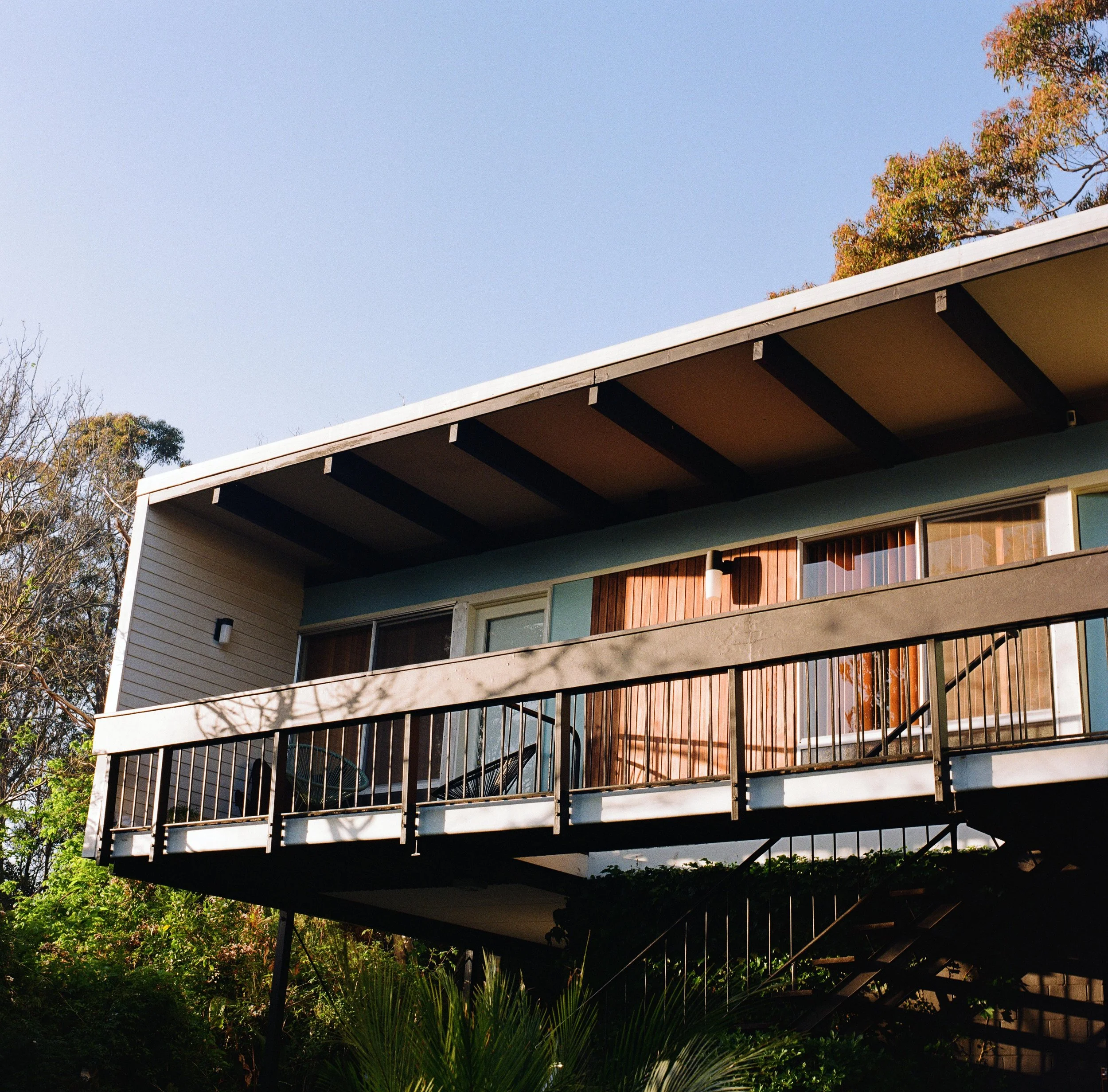
The Beachcomber House Is A Modernist Utopia
Words + Photos: Jack Shepherdson
Collecting mid-century modernist design can be very addictive. I’ve learnt this firsthand after spending years hunting for modernist furniture bargains for my first apartment - learning the hard way that collecting furniture in your 20s as a renter is a dangerous game. For some collectors who are bitten by the modernist bug, it can go even further.
So what’s the next step beyond furniture and art to satiate a taste for modernism? You buy a mid-century modernist house, of course. Australia developed a rather unique style of building modernist homes. One of the best in the country is undoubtedly the Beachcomber house, and this weekend one of these heritage-trust homes will play host to Tim Ross and some lucky members of the public for the first time in many years.
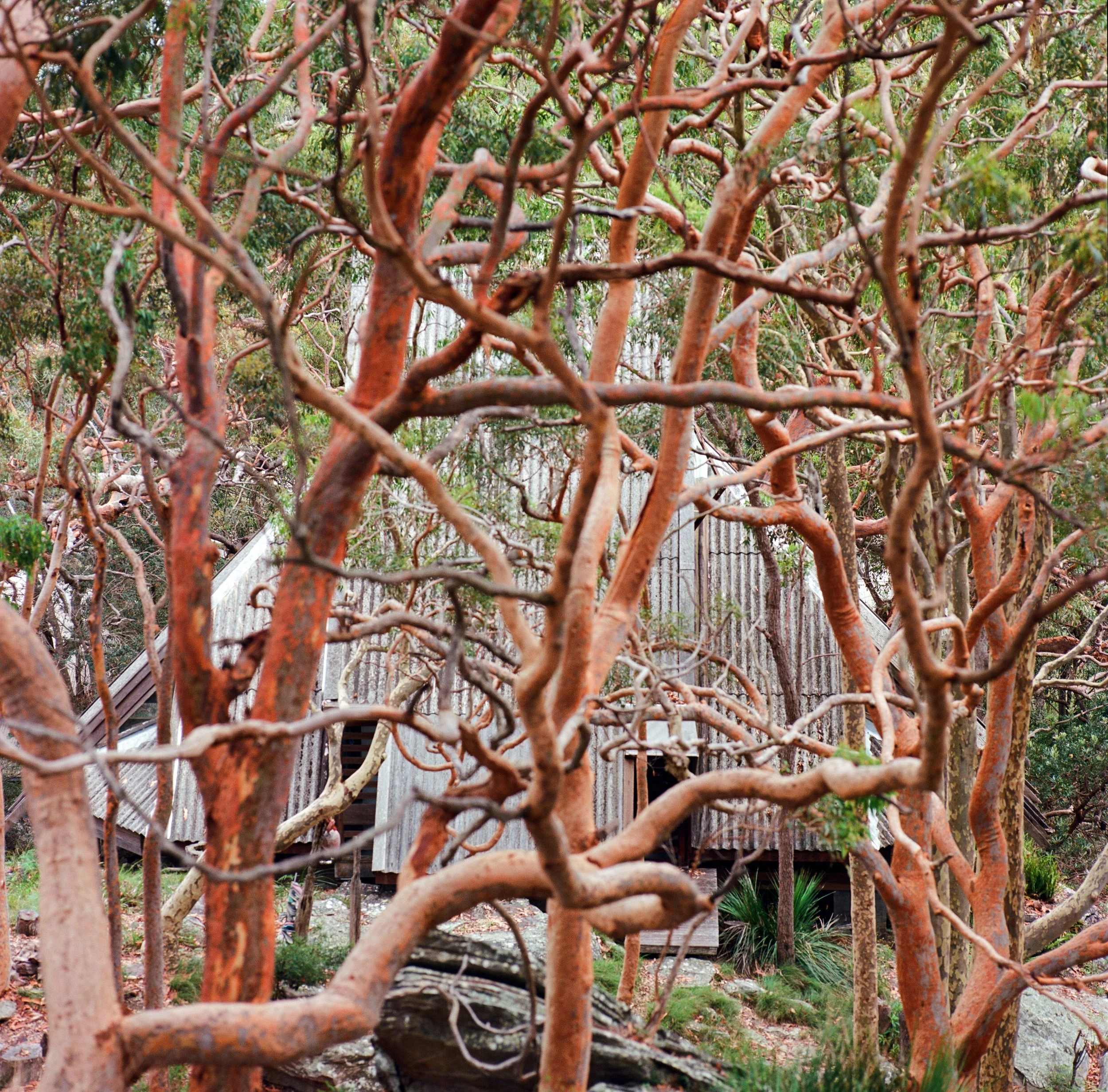
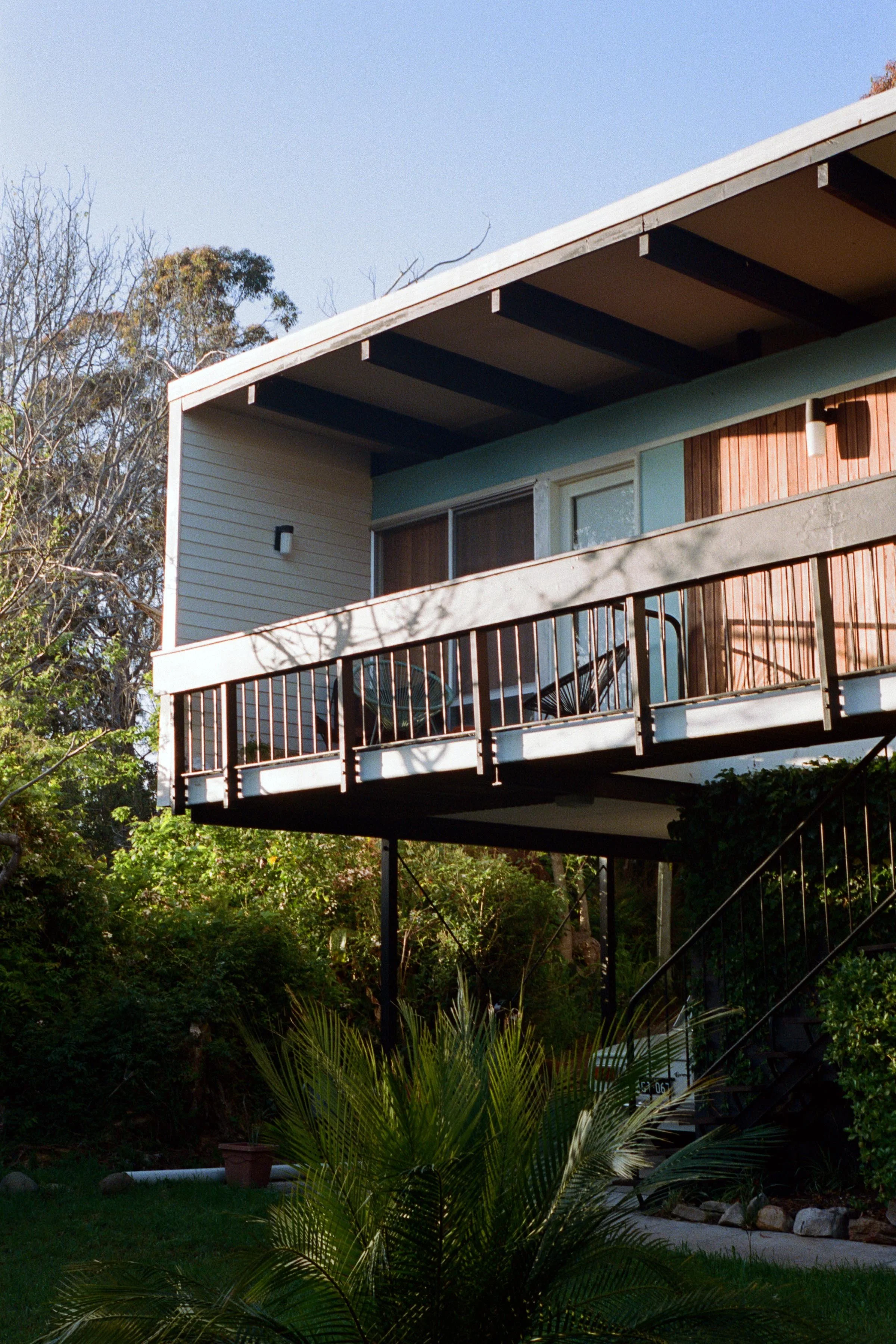
This Beachcomber house is nestled at the top of a valley in the Blue Mountains, an hour west of Sydney. It isn’t a unique home, but it has lived a very unique life. It’s a project home, a product of the Small Homes Initiative, which was a 1950s Australian government program to commission Australia’s greatest architects to design modular home plans, so that all Aussies building a roof above their heads had access to world-class design. It resulted in thousands of architectural project homes springing up all over the country, including Beachcomber houses designed by Nino Sydney, which were built in the hundreds. As the name suggests, the Beachcomber was designed to overlook the ocean, but this particular Beachcomber made its way to the mountains.
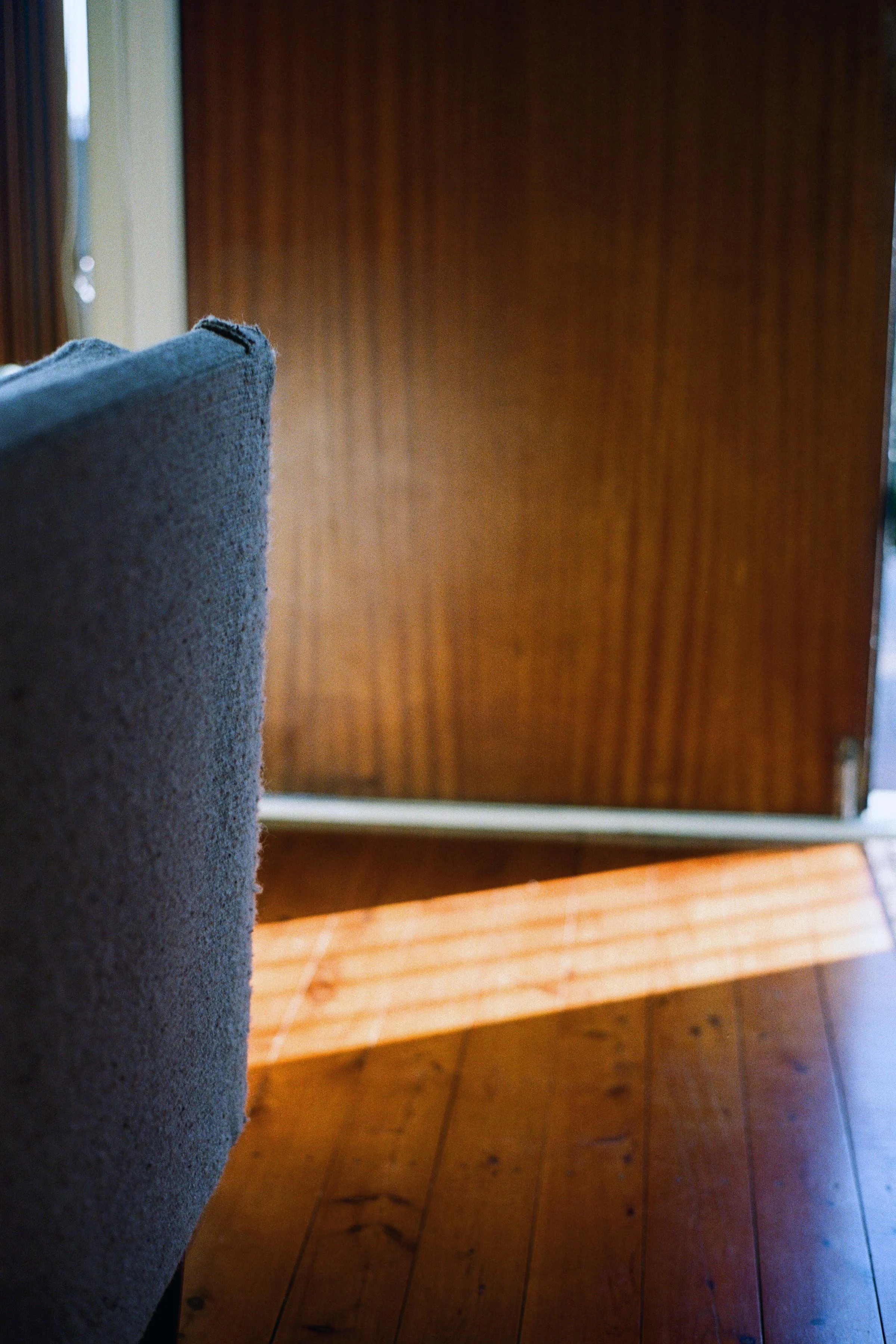
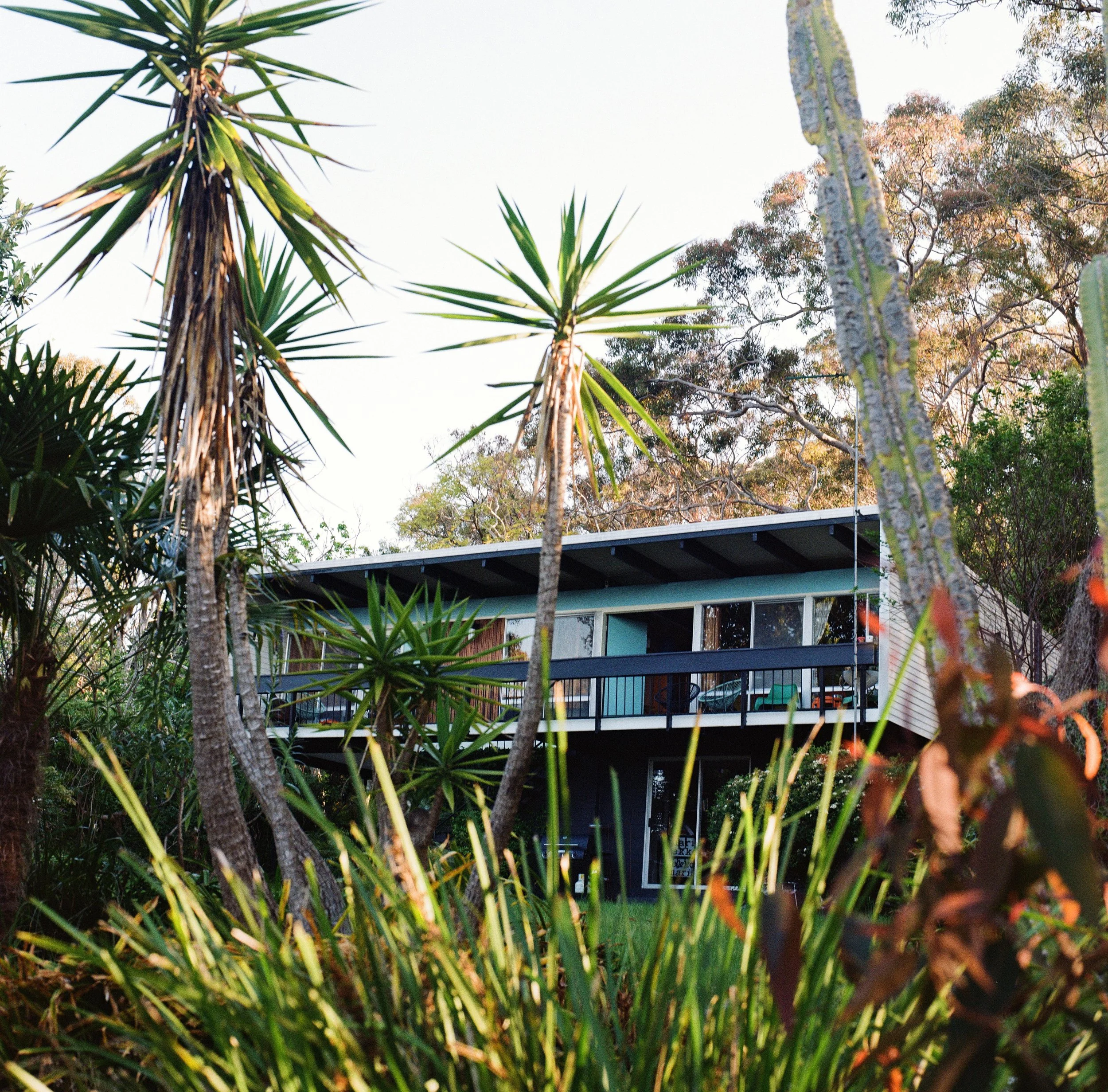
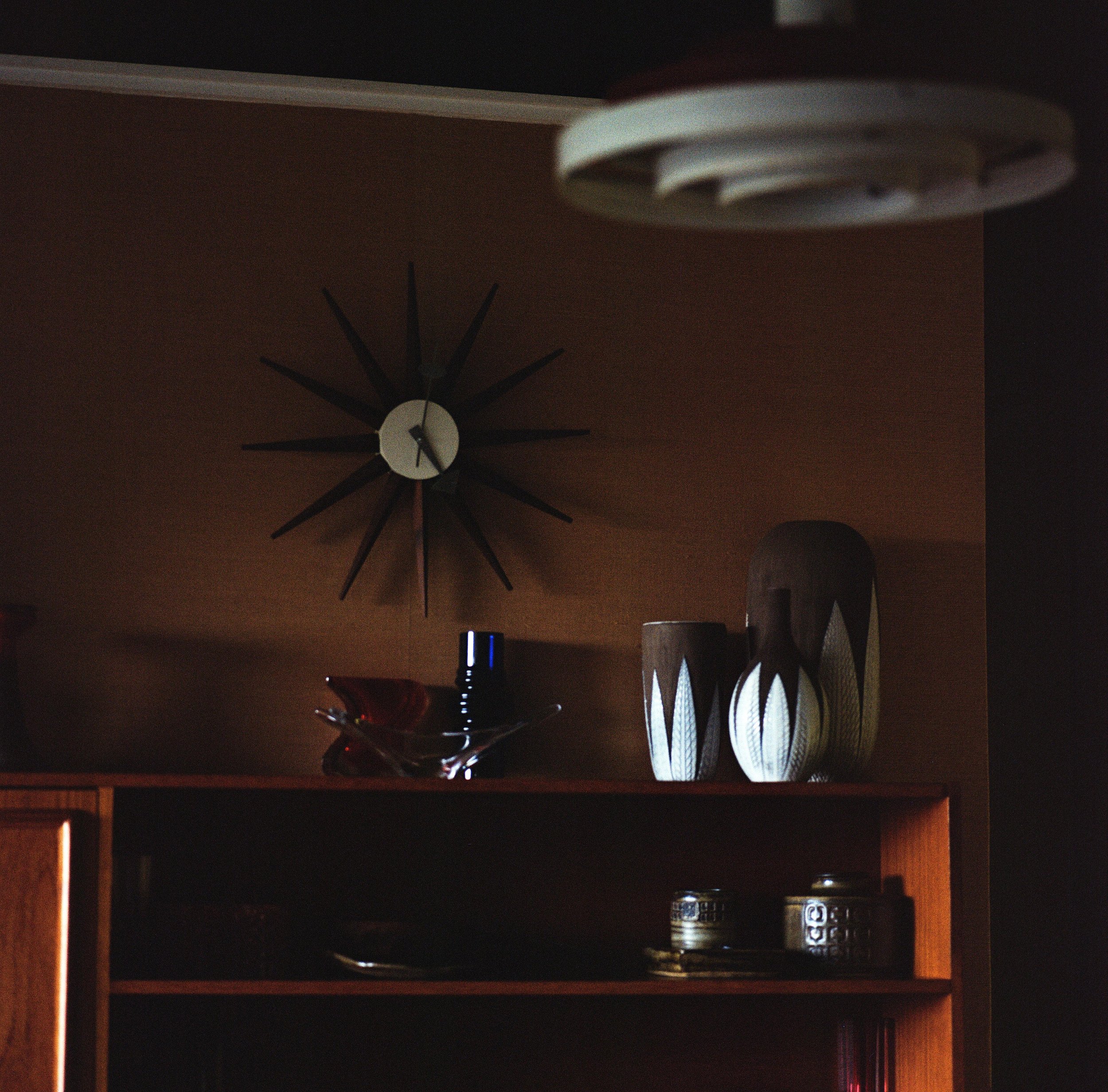
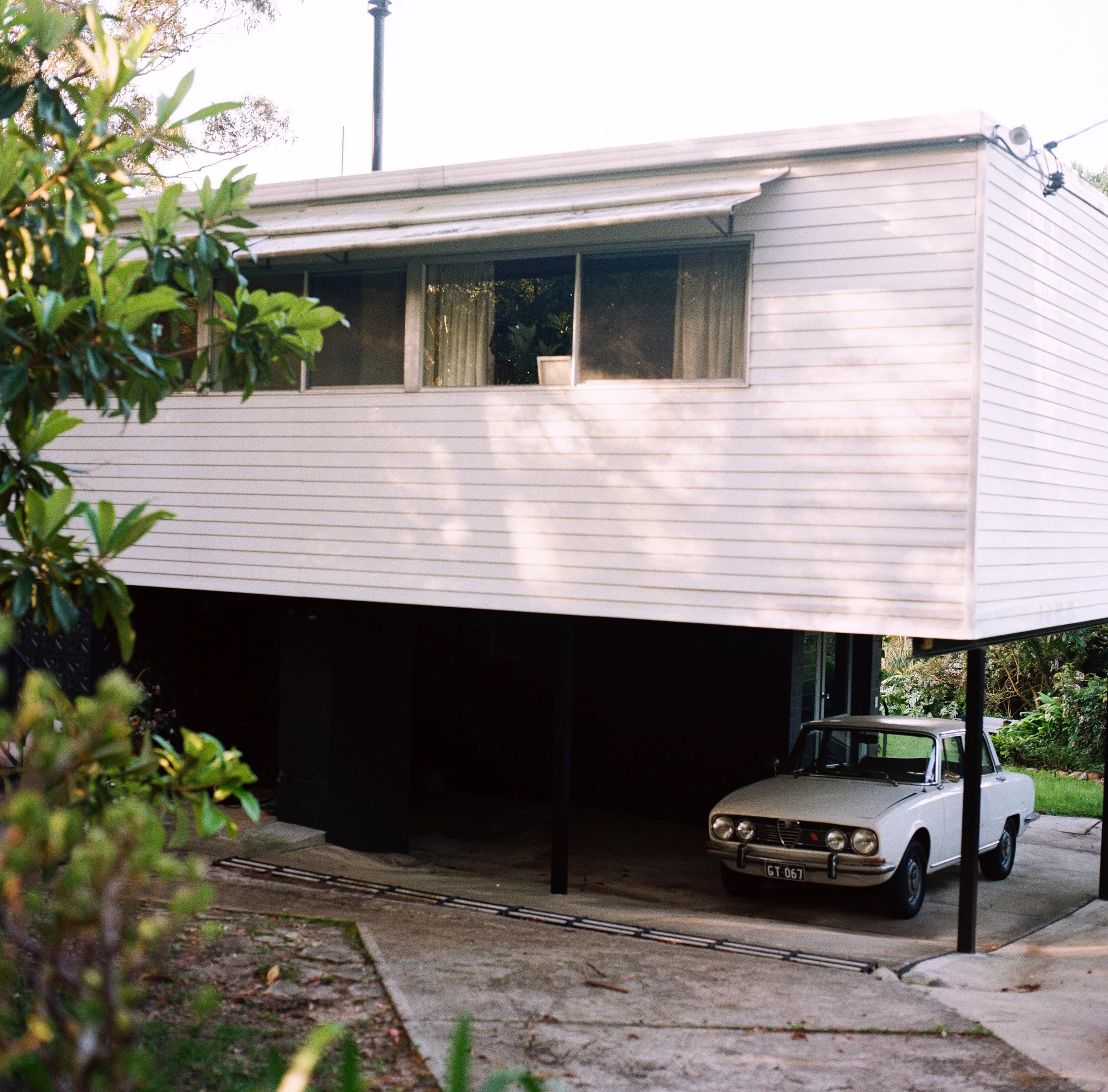
I count myself extremely lucky to have spent a few weekends at this Beachcomber over the years, and I remain spellbound by it.
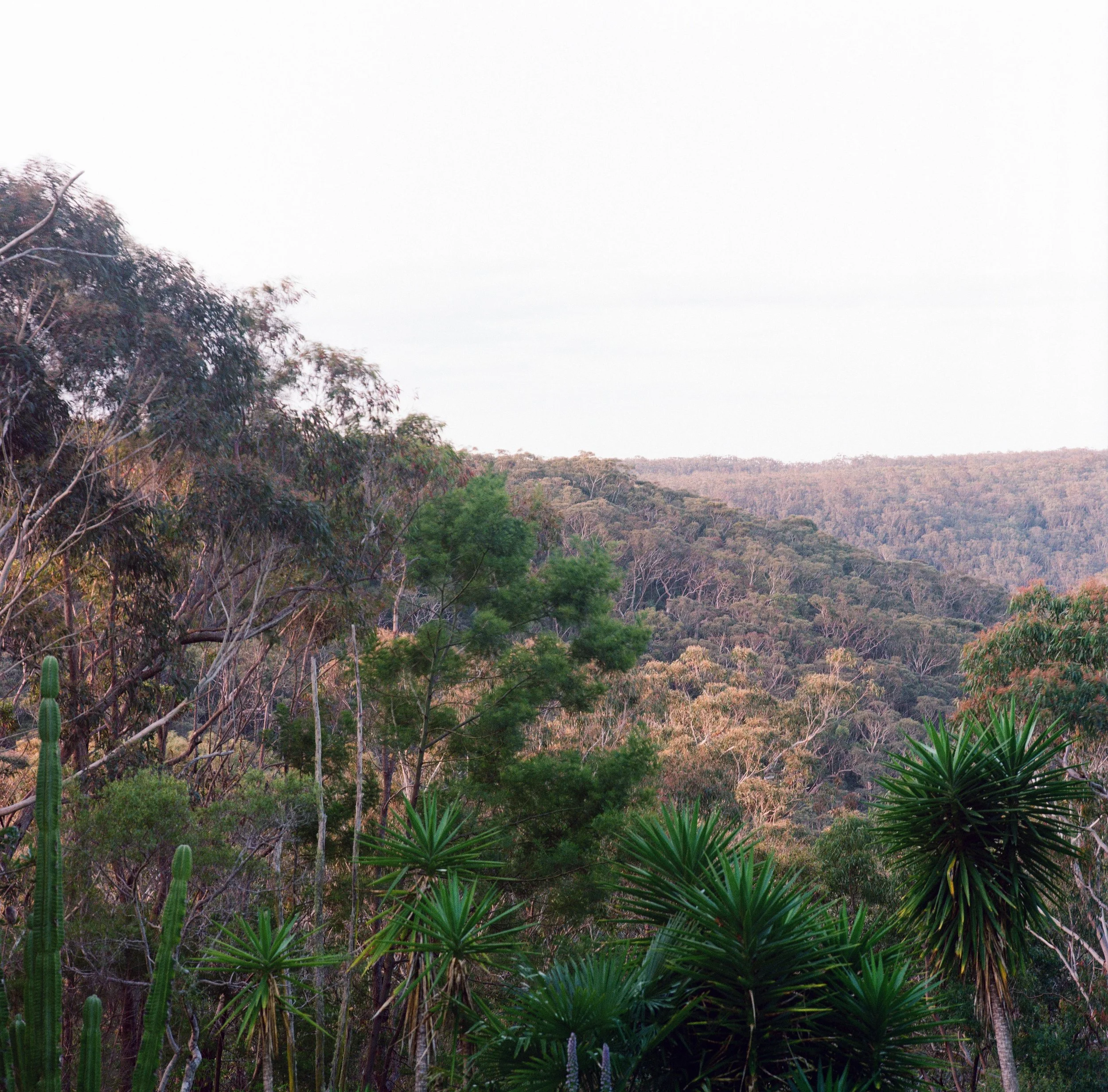
Nino Sydney took a lightweight approach when designing the Beachcomber, suspending the house on a skinny centre support to allow space for a carport and semi-detached living space in the downstairs level of the house. Walking up the timber stairs and through the raised front doors, you’re greeted with an open-plan dining room and wrap-around living space, kitchen, three bedrooms, and a shared bathroom. The entire back wall of the house looks out over the balcony through floor-to-ceiling glass windows. The full-width balcony leads to a second staircase leading down to the expansive yard, and a captivating view up the valley at this very happy home.
The house is beautifully light-filled at all hours, and with views of the valley and no neighbours looking in, it glows like a lantern at night when lit up inside. Lounging around the living room, you admire the yellow wall panels and gaze up at the ceiling’s support trusses, a black ribcage supporting the white ceiling above you. They also serve another purpose, by allowing small windows to sit above each of the adjoining rooms’ walls between the top and the roof, so even more light and a sense of airiness permeates the house.
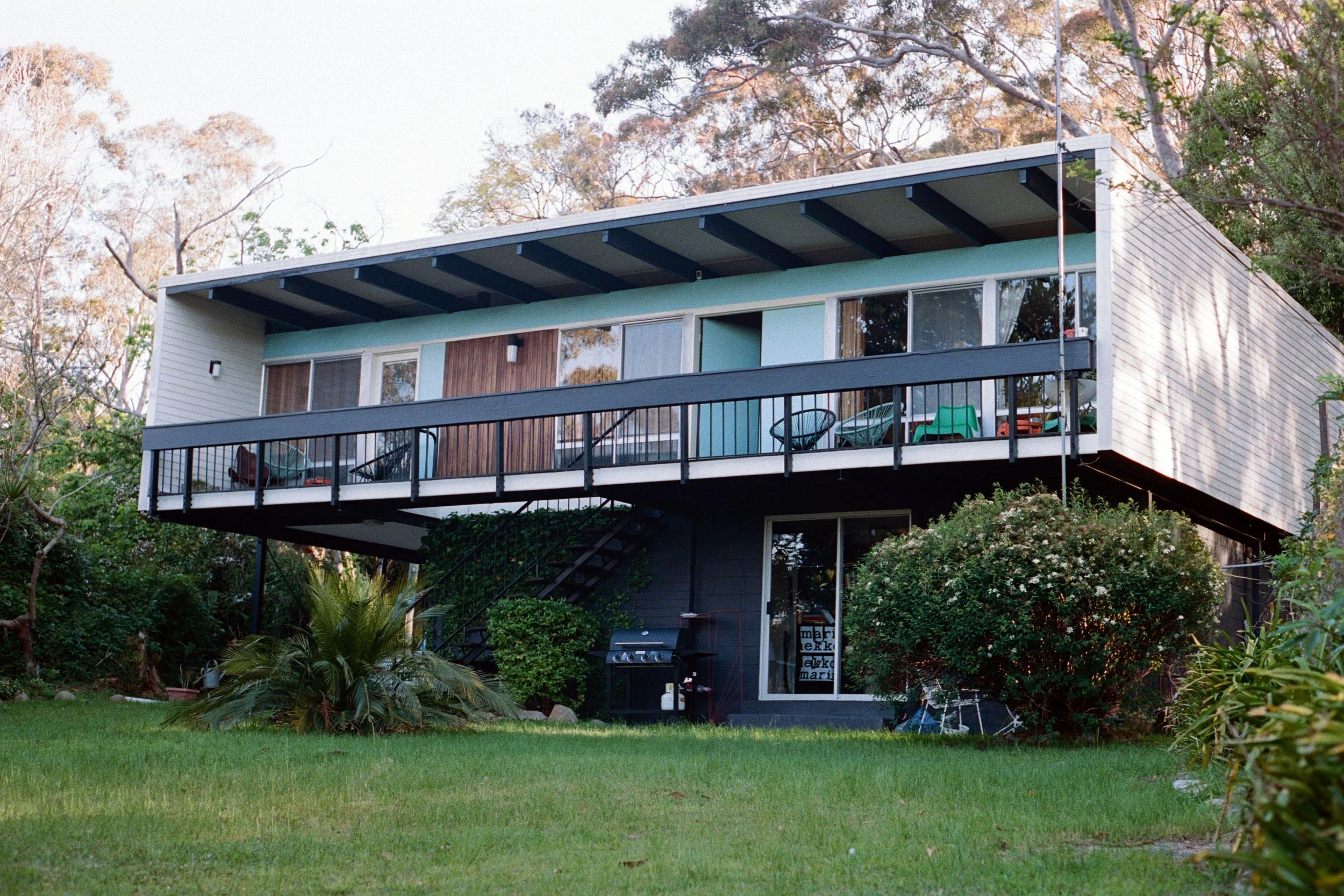
The restoration of the home is an extraordinary achievement, especially considering the previous owners purchased the house in a completely run-down state. They spotted it for the gem it was, before having Nino Sydney himself advise on its restoration. This oversight from the architect himself means that of the handful of surviving Beachcomber houses dotted around Australia, this example is by far the most true to the original design - earning it a place on the National Trust list.
Spending a weekend in the Beachcomber is like stepping back into the 1960s, right down to the tiny details. Its original kitchen has been retained, complete with orange walls that clash with a pink oven. The house is also kitted out entirely with period furniture - most of it Australian designed, like the supremely comfortable Tessa net-back chairs in an outrageous purple leather.
Like the Lobster Bay House, the Beachcomber is a glorious example of Australian modernism, where the Bauhaus style was adapted to fit the Australian lifestyle and climate. It’s built with Australian timber, and Nino’s design opens the house up to the Australian bush. It allows the house to breathe, letting in the landscape and birdsong.
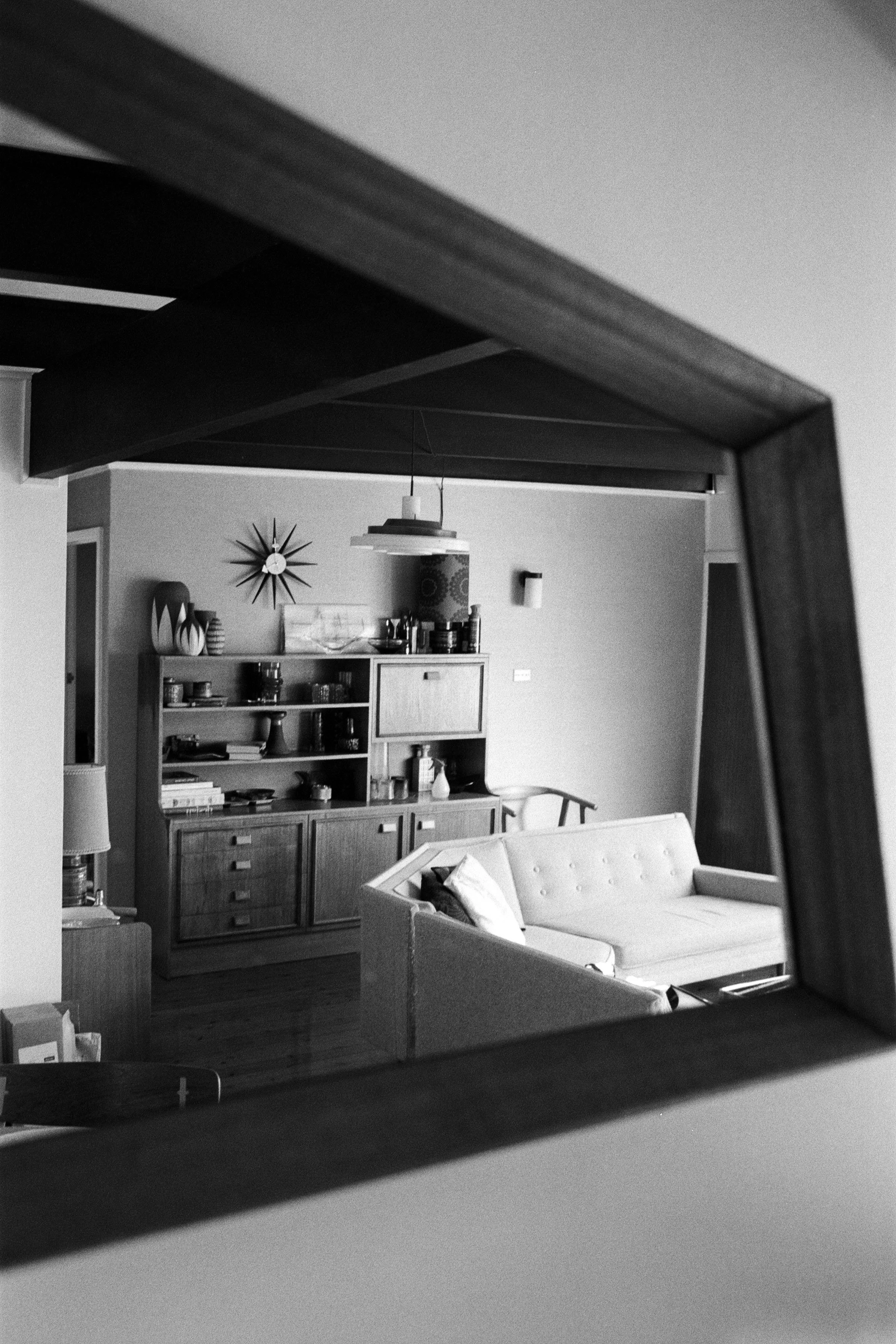
It’s also a product of a time when good design was attainable - the Beachcomber house was designed to cost as much as two family cars. Despite being Bauhaus on a budget, it still had as much care and attention to detail from a skilled architect as a millionaire's house. Sadly, that’s not the world we live in anymore.
It’s a topic that will be tackled this weekend when Tim Ross hosts his latest show The Australian Dream? at this Beachcomber home, performing to a lucky few who secured tickets to the sold-out event before touring the house over drinks after the gig. Tim’s show is as much a trip down memory lane in Australia’s architecture history as it is about the virtues of democratising good design and our uniquely Australian obsession with housing - a fitting show for such a magical home.
You may also like
-
![]()
A House Amongst The Trees: The Lobster Bay House
A beautiful reminder of the magic that great architecture has.
-
![]()
Internet Time: When Swatch Invented A New System of Timekeeping
In 1998, Swatch posed a question: what if we all lived on Internet Time?
-
![]()
A Lynchian Dream: Haus Nowhere
Seoul sets a new standard for retail activations.
-
![]()
Coveted Object: Arno Coffee Cups
“If you’re going to have an apple, make sure it’s the crunchiest, juiciest apple you can find.”
-
![]()
Time With: Billy Zammit & Tahmyna Rad
“I really feel the way I live my life is like a research project.”
-
![]()
Scorpio By Name & Nature: The Abarth 695 Competizione
A jellybean-shaped muscle car that oozes charisma.
-
![]()
Going Big, Bold and Bright with the Doxa Sub 300T Divingstar
Unapologetic in its purpose, the Doxa Sub 300T brings an authenticity rarely seen from other watches.
-
![]()
The Rolex Oyster Perpetual Pistachio could be the perfect everyday watch
This green doesn’t shout, it whispers.
-
![]()
Coveted Object: Omega Constellation Manhattan
While all Omega Constellations are created equally, some are more equal than others.
-
![]()
Getting Stoned with the Dennison A.L.D
Dennison is here to democratise stone dials, and we’re all for it.
-
![]()
An Oasis In The Heart Of The City: The Barbican Conservatory
Tropical Brutalism never looked so magical.